AI Phone Answering Service for Restaurants: How to Cut Missed Calls, Boost Orders, and Delight Guests
Introduction
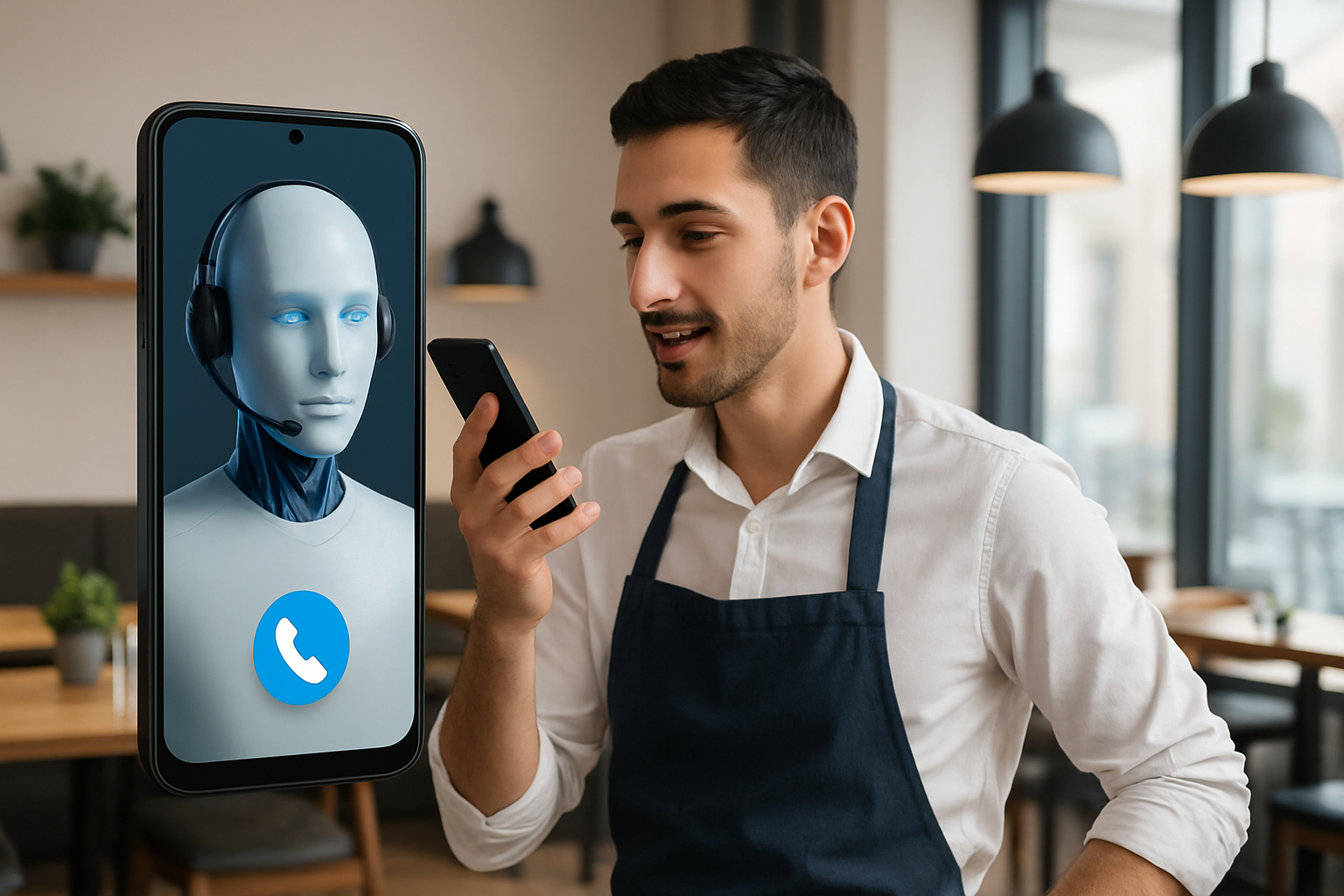
If your dining room stays full but your phone lines don’t stop ringing—and half those calls go to voicemail—you’re leaving money on the table. Many independent restaurants struggle with the same problem: staff are busy plating dishes and greeting guests, not tethered to the phone. The result is missed reservations, frustrated callers, and lost orders. An AI phone answering service for restaurants can quietly fix that. It answers routine questions, routes urgent calls, takes bookings, and even captures to-go orders—24/7—so you stop leaking revenue when your team is heads-down serving.
This guide explains how voice AI now handles the most common restaurant calls with natural, human-like conversations. You’ll see what’s possible, which tools are reliable, how to set one up the right way, and how local businesses—from neighborhood cafes to growing multi-location groups—use it to increase revenue and improve guest satisfaction without adding payroll.
Why an AI Phone Answering Service for Restaurants Matters for Local Businesses
Phone demand hasn’t disappeared; it’s shifted. Guests still call to ask about wait times, menu items, allergens, reservations, pickup ETA, parking, and private events. The challenge is coverage. At peak hours, even the most organized teams can’t answer every call.
Here’s the opportunity:
- Capture revenue you already earned: Many “simple” calls are actually buying signals—table bookings, catering inquiries, or takeout orders. If those calls go unanswered, guests choose another spot.
- Serve after hours: People plan meals late at night or early in the morning. A 24/7 AI receptionist ensures your brand is available at any time.
- Reduce staff interruptions: Every call pulled a server off the floor or a manager out of prep. AI handles the repetitive questions so staff focus on hospitality.
- Improve guest experience: A fast, polite virtual receptionist that gives accurate, up-to-date information elevates your brand and keeps callers off hold.
In short, an AI phone answering service for restaurants turns phones from a cost center into a predictable revenue and service channel—without adding headcount.
How AI Is Transforming Restaurant Phone Answering
Modern voice AI combines automatic speech recognition (ASR), natural language understanding (NLU), and conversational design to understand what callers want and complete tasks quickly. In practical terms:
- Understands natural speech: Callers don’t need to “press 1.” They speak normally—“Do you have gluten-free options?” or “I’d like a table for four at 7 pm”—and the AI understands.
- Handles noisy environments and accents: Robust ASR trained on diverse accents and acoustic conditions improves accuracy during dinner rushes.
- Executes tasks: The AI can check table availability, place a reservation, send a text confirmation, look up an order status, or trigger a callback.
- Integrates with your systems: Connect to OpenTable, Resy, SevenRooms, or Tock for reservations; Toast, Square for Restaurants, or Olo for ordering; Google Business Profile for hours and updates.
- Smart routing: It triages calls and forwards urgent issues—like a large catering request or VIP complaint—to the right person with context, while deflecting routine questions.
- Continuous learning: Over time, it adapts to seasonal menus, new hours, and frequently asked questions, reducing friction for callers.
For owners, the result is a dependable virtual receptionist that answers instantly, resolves common calls, and knows when to escalate to a human.
Best AI Tools for an AI Phone Answering Service for Restaurants
Below are reputable platforms used today by restaurants and hospitality brands. Choose based on your size, budget, and integration needs.
1) Slang.ai
- What it is: A conversational phone concierge tailored to restaurants.
- Strengths: Natural conversations, restaurant-specific intents (hours, reservations, menu questions), and integrations with popular reservation and ordering systems. Designed for quick deployment with strong analytics.
2) SoundHound Smart Answering (for Restaurants)
- What it is: Voice AI by SoundHound designed for restaurants and drive‑thru.
- Strengths: High-quality speech recognition, menu understanding, and integrations across POS and ordering ecosystems. Built to handle noisy environments and high call volumes.
3) PolyAI
- What it is: Enterprise-grade voice assistants for hospitality and restaurants.
- Strengths: Highly natural conversations, multilingual support, strong NLU, and robust call transfer/containment. Often used by brands seeking best-in-class caller experience.
4) Kea
- What it is: AI phone ordering and assistant for restaurants.
- Strengths: Specializes in taking orders accurately, confirming items, and integrating with POS/ordering platforms to reduce errors and wait times.
5) Amazon Connect + Amazon Lex
- What it is: A cloud contact center (Connect) with conversational AI (Lex) to build custom voice bots.
- Strengths: Flexible, scalable, pay-as-you-go. Good for multi-location groups or operators with IT support who want a tailored solution and deep AWS integration.
6) Google Dialogflow CX + Contact Center AI
- What it is: Google’s enterprise conversational AI stack, often implemented through partners.
- Strengths: Advanced dialog management, multilingual support, and integrations with telephony providers. Great for businesses that want a sophisticated, customizable assistant.
7) RingCentral (Virtual Agent and IVR, with Google CCAI integrations)
- What it is: A leading business phone system with AI-powered virtual agents.
- Strengths: Unified telephony plus AI, call routing, analytics, and reliable uptime; can integrate with Dialogflow CX for restaurant-specific flows.
Tip: If you want fast time-to-value, pick a restaurant-focused vendor (e.g., Slang.ai, SoundHound, Kea). If you need heavy customization across many brands or concepts, consider PolyAI or a build with Amazon Connect/Google Dialogflow via a trusted implementation partner.
Step-by-Step Guide to Using an AI Phone Answering Service for Restaurants
Follow this practical playbook to go live with confidence:
1) Map your top call intents
- Review two weeks of call logs and staff notes. Categorize the top 10 reasons guests call (reservations, hours, directions, allergens, takeout status, catering, private dining, curbside pickup, gift cards, holiday menus).
- Estimate volumes per intent. This determines scope and ROI.
2) Choose your platform
- If you need quick deployment with restaurant templates, shortlist Slang.ai, SoundHound, or Kea.
- If you need full customization, shortlist PolyAI, Amazon Connect + Lex, or Dialogflow CX.
- Confirm integrations: reservations (OpenTable/Resy/SevenRooms/Tock), POS (Toast/Square), ordering (Olo), messaging (SMS), and your phone provider.
3) Design your call flow
- Keep it conversational: “How can I help you today?”
- Create clear escalation paths: “I can connect you to a manager,” with configurable hours and rules.
- Add smart deflection: If a caller asks for directions or hours, offer to text a link.
4) Write answers and data sources
- Prepare short, brand-accurate answers for FAQs (hours, parking, corkage, dress code, allergens, patio policy, pet policy, delivery partners).
- Use authoritative data: Sync with your Google Business Profile and reservation system so answers stay up to date.
5) Configure reservations and ordering
- Connect your reservation platform to check real-time availability and send confirmations via SMS or email.
- If taking orders by phone, connect to your POS/ordering platform. Decide how to handle payments—ideally by sending a secure payment link or transferring to a human for card capture to maintain PCI compliance.
6) Set business rules and failover
- Define when to escalate to a human (VIPs, large parties, catering, complaints).
- Set office hours and after-hours logic. Provide voicemail fallback for edge cases.
7) Test with real calls
- Dry-run common scenarios from a noisy environment. Test accents, background music, and kitchen clatter.
- Validate end-to-end flows: reservation booked, text confirmation sent, POS ticket created where relevant.
8) Train and refine
- Use transcripts to find misunderstandings. Add synonyms, local slang, dish names, and neighborhood nicknames.
- Update menu, specials, and seasonal items. Teach the AI new items weekly if your menu changes often.
9) Launch softly, then scale
- Start with one location or limited intents. Monitor call containment (resolved without transfer), average handle time, and customer satisfaction.
- Roll out to more locations once KPIs stabilize.
10) Promote it to guests
- Update your Google Business Profile: “Fast answers by phone 24/7.”
- Add a short message to social media and menus: “Call anytime for reservations, hours, or order updates.”
11) Maintain compliance and privacy
- Avoid storing card numbers in transcripts. Use secure links for payments.
- Add call recording disclosures if required by your state. Honor opt-out and data deletion requests to comply with CCPA/GDPR where applicable.
Real-World Example or Case Study
The following is a composite example inspired by typical results reported by leading vendors and restaurants.
Pine & Pepper, a 70-seat neighborhood bistro, was missing 35% of calls during peak hours. Staff were juggling the host stand and phones, especially on weekend nights. The owner estimated they were losing 8–12 reservations per week plus numerous takeout inquiries.
What they did
- Installed a dedicated number that forwards to an AI phone answering service during peak hours and after close.
- Integrated OpenTable for real-time reservations and Toast for order lookups.
- Trained the assistant on the specific menu: vegan entrees, nut and dairy allergens, and weekend brunch specials.
- Set rules to auto-transfer catering calls over $500 to the GM’s mobile with context via SMS.
Results after eight weeks
- Missed calls reduced by 72%.
- Reservations increased 16%, with 24% of bookings made after 9 pm when staff were minimal.
- Average call handle time dropped from 2:20 to 0:58 for FAQs.
- Staff interruptions decreased, improving table turns and upsells on busy nights.
- Guests praised the immediate answers and texted directions link, reducing “where do I park?” calls.
The owner’s takeaway: “It’s like having a calm, knowledgeable host who never needs a break. We reclaimed staff focus without sacrificing service.”
Benefits of Using AI in Local Business
- 24/7 coverage without adding payroll
- Fewer missed calls and faster response times
- Higher booking conversion and better show rates via confirmations and reminders
- Accurate answers about allergens, specials, and policies
- Reduced staff interruptions and improved in-house hospitality
- Consistent brand voice and service standards across locations
- Actionable analytics on caller intents and peak demand
- Scalable foundation for promotions, events, and seasonal menus
Common Mistakes to Avoid
- Over-automating everything: Always provide an option to reach a human—especially for complaints, VIPs, or large parties.
- Launching without your real menu and policies: Generic answers cause frustration. Load current menus, allergy notes, and seating rules.
- Ignoring multilingual needs: If you serve a diverse neighborhood, add Spanish or other languages your guests use.
- Skipping user testing: Test in real noise with real questions; refine synonyms and local references.
- Not integrating with reservations/POS: Manual handoffs create errors. Connect systems to complete tasks end to end.
- Forgetting compliance: Use secure payment flows, add call-recording disclosures, and protect customer data.
- No measurement plan: Track containment rate, conversion to bookings, after-hours call volume, and CSAT to prove ROI.
FAQs
1) What is an AI phone answering service for restaurants?
It’s a voice assistant that answers your phone, understands natural speech, and completes common tasks—like taking reservations, sharing hours and directions, answering menu questions, looking up order status, and routing important calls—so guests get fast, accurate help 24/7.
2) Can it understand accents, background noise, and multilingual callers?
Yes. The best systems use advanced speech recognition and noise handling. Look for vendors with proven performance in restaurants and optional multilingual support (e.g., English/Spanish). Test with your own environment to validate accuracy.
3) Will it integrate with OpenTable, Resy, Toast, Square, or Olo?
Most restaurant-focused tools integrate with major reservation and POS/ordering platforms. Confirm your exact stack with the vendor—e.g., OpenTable/Resy for bookings, Toast/Square for POS, Olo for online ordering—and test end-to-end flows before launch.
4) How do I calculate ROI?
Start with missed-call rate × average order/reservation value × recovery rate. Add after-hours bookings captured and staff time saved. Most operators see immediate gains from reduced missed calls and better conversion on routine inquiries.
5) Is it safe to take payments over the phone with AI?
Avoid capturing card numbers in conversation or transcripts. Use secure payment links via SMS/email or transfer to a trained staff member with a PCI-compliant process. Ask vendors about redaction, encryption, and data retention policies.
Conclusion
For busy operators, an AI phone answering service for restaurants is the simplest way to stop missing calls, book more tables, and give guests instant answers—without stretching your team thin. Start small: automate your top five call intents, connect to your reservation and POS systems, and measure containment and conversion. In a few weeks, you’ll know exactly how much revenue you’ve unlocked and how much time you’ve given back to your staff. If you’re ready to test the waters, pilot an AI phone answering service for restaurants at one location and expand once the numbers prove themselves.
Sources & References:
- https://www.slang.ai
- https://soundhound.com/solutions/food-and-beverage
- https://poly.ai
- https://aws.amazon.com/connect/
- https://cloud.google.com/dialogflow/cx
- https://www.mckinsey.com/capabilities/operations/our-insights/ai-powered-customer-service