Airport Restaurants Aruba: An AI Playbook to Capture Traveler Spend and Grow Local Revenue
Introduction
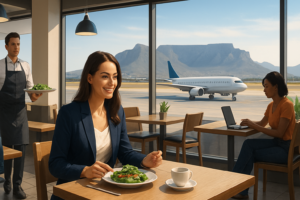
Hungry travelers, tight boarding times, and unpredictable flight delays are everyday realities at Queen Beatrix International Airport (AUA). For local owners across Aruba—restaurants in the terminal, cafes within a quick ride in Oranjestad, and even nearby retail stores—there’s a powerful window to convert airport foot traffic into high-margin sales. The challenge? Stand out on Maps, serve fast without waste, and communicate clearly with international guests. That’s where a smart AI strategy can turn airport restaurants Aruba into consistent top performers.
In this guide, you’ll learn exactly how AI is helping hospitality businesses at and around airports boost visibility, speed up service, predict demand, reduce food waste, and lift average order value—all while freeing up time. You’ll also find specific tools, step-by-step implementation guidance, and a case-style example tailored to the Aruba context. Whether you run a quick-service concept post-security, a sit-down spot pre-security, or a nearby cafe that caters to incoming and departing guests, this is the practical playbook to grow revenue efficiently.
Why Airport Restaurants Aruba Matter for Local Businesses
Airport dining is not just about quick bites. It’s a uniquely profitable environment driven by:
- High dwell time: Travelers arrive early, face delays, or wait during layovers. Idle time equals browsing and buying.
- Urgency and convenience: Passengers will pay for speed, clarity, and reliability—especially before boarding.
- International demand: Aruba welcomes global visitors, creating multilingual and diverse taste preferences.
- Search-driven discovery: Most travelers use Google Maps to find what’s open near their gate, with “open now,” “near me,” and “best coffee” queries.
- Ancillary revenue potential: Pre-order for pick-up, bundle deals, loyalty add-ons, and last-minute upsells increase basket size.
For local owners, airport restaurants Aruba represent a high-visibility gateway to recurring, high-margin sales—if the operation is discoverable, fast, and data-informed. AI makes each of those levers more predictable and profitable.
How AI Is Transforming Airport Restaurants Aruba
AI is no longer a luxury for big chains. It’s a set of practical tools that help small airport and near-airport venues run smarter:
- Predictive demand: Machine learning forecasts demand by hour and product, using seasonality, flight schedules, cruise arrivals, and weather to guide prep and staffing.
- Inventory optimization: Algorithms help you order and prep the right amounts to reduce waste and prevent stock-outs during peak flight banks.
- Dynamic menus and recommendations: Systems can push best-sellers, substitutes for out-of-stock items, and bundle offers (coffee + pastry + water) in real time.
- Multilingual experiences: AI translation converts menus, signage, and QR code experiences into languages common at AUA (English, Spanish, Dutch, Papiamento, Portuguese, German, French), improving clarity and speed.
- Smarter ads: Geofenced campaigns target passengers near the terminal, while automated bidding on Google and Meta finds high-intent searchers (“open now,” “gate food”) at the right price.
- Reputation and sentiment: AI analyzes Google Maps and TripAdvisor reviews to surface top fixes (e.g., “rush at 7–8 a.m.”) and strengths to amplify (“fast service near Gate 5”).
- Queue and throughput insights: Computer vision and sensors can estimate line length, average wait, and conversion—enabling quick adjustments mid-shift.
Best AI Tools for Airport and Near-Airport Use Cases
- Google Business Profile + Maps: Essential for visibility. Use structured hours, accurate categories (airport location, coffee shop, quick service, etc.), menu links, photos by time of day, and Local Posts to highlight specials.
- Google Ads (Smart Bidding, Performance Max): ML-powered bidding to capture high-intent searchers (“breakfast near AUA,” “airport food Aruba”) and geofenced campaigns around the terminal.
- Meta Ads (Advantage+): AI-driven audience expansion and creative optimization to reach travelers browsing Instagram/Facebook at the airport.
- Toast (POS) or Square for Restaurants: Modern POS with sales forecasting, menu engineering analytics, and kitchen display systems that speed up throughput.
- Tenzo: Restaurant analytics platform that aggregates POS, labor, and weather data to forecast demand and reduce waste.
- ClearCOGS: AI forecasting focused on prep and inventory for restaurants to predict exact quantities and cut food waste.
- SevenRooms or Thanx: Guest experience and loyalty platforms using AI to segment audiences, trigger offers, and personalize campaigns.
- DeepL: High-quality translation for menus, signage, and customer messaging, including QR code menus for quick language switching.
- Dialogflow (Google) or WhatsApp Business API (via Twilio): Build a simple, multilingual chatbot for FAQs, pre-order links, hours, and directions.
- Placer.ai or Density: Location analytics and occupancy insights to understand peak flows and plan staffing.
- Brandwatch or MonkeyLearn: Sentiment and review analysis to identify themes and prioritize fixes.
- Looker Studio (with GA4 data): Build real-time dashboards for conversions from Maps/Ads to online orders or calls.
Step-by-Step Guide to Using AI in This Industry
1) Nail the foundation on Google Maps
- Claim and optimize your Google Business Profile. Use “Airport restaurant,” “Coffee shop,” or “Fast-casual” as appropriate, add “located at Queen Beatrix International Airport (AUA)” in the description, and upload high-quality photos of your counter, menu board, and top items.
- Add menu URLs, order links, and “open now” accurate hours, including holiday/schedule updates.
- Post weekly updates: “Gate-friendly breakfast combos,” “Fast pre-boarding lunch,” and multilingual highlights.
2) Implement schema and tracking
- Add LocalBusiness and Menu schema to your website. Include price range, hours, and a structured menu.
- Set up GA4 to track calls, menu clicks, and order page visits. Connect to Looker Studio for a dashboard.
3) Forecast demand with POS analytics
- Enable sales forecasting on Toast or Square. Review hourly product-level trends by day of week and by season.
- Connect Tenzo or ClearCOGS for prep predictions. Use outputs to generate daily production sheets for the kitchen.
4) Optimize staffing and throughput
- Align staffing to forecasted peaks (e.g., 6–9 a.m. outbound bank, 12–2 p.m. midday rush). Train runners and baristas to specific roles during peaks to lift orders per labor hour.
- Use a kitchen display system (KDS) to streamline tickets and reduce errors.
5) Build multilingual, QR-first experiences
- Create a QR menu that auto-detects language or lets guests switch between English, Spanish, Dutch, and Papiamento.
- Use DeepL to translate item names and short descriptions. Prioritize clarity (e.g., “grab-and-go,” “gate-ready,” “5-minute prep”).
6) Launch geofenced ads with AI bidding
- On Google Ads, target a radius around AUA and Oranjestad with search and Maps ads for “open now,” “airport breakfast Aruba,” and “best coffee near AUA.”
- On Meta, run short-form video showcasing speed, freshness, and carry-on friendly packaging. Use Advantage+ placements and budget caps.
7) Personalize offers with loyalty and data capture
- Offer Wi-Fi sign-in or QR receipt enrollment for a simple loyalty club. Give 10% off a second visit within 7 days or a bundled “Departure Deal.”
- Use SevenRooms or Thanx to segment by time-of-day and language. Trigger offers 90 minutes before known departure peaks.
8) Add a simple chatbot for FAQs and pre-order
- Build a WhatsApp or web chatbot via Dialogflow or Twilio. Automate answers to “Are you open now?”, “Where are you located post-security?”, and “What’s the fastest pick-up item?”
- Link to online order or pre-order (even if it’s a simple form or call-to-order).
9) Monitor reviews and sentiment
- Use Brandwatch or MonkeyLearn to analyze Google Maps and TripAdvisor. Tag themes: speed, friendliness, clarity of menu, value for money.
- Reply in multiple languages and pin fixes (“We added a 5-minute counter line before morning flights”).
10) Iterate menus and pricing with data
- Identify high-margin bundles and promote them during rush windows.
- Retire slow movers or prep them in smaller batches. Use forecasting updates weekly to refine your par levels.
Real-World Example or Case Study
Divi Deli is a fictional quick-service concept located post-security at AUA, near a busy morning gate cluster. Before implementing AI tools, the deli experienced long lines during the 6:30–9:00 a.m. outbound rush, frequent croissant stock-outs by 8:15 a.m., and inconsistent reviews about wait times.
What changed with an AI-driven approach:
- Demand forecasting: Using POS sales history plus Tenzo, Divi Deli forecasted an extra 18% spike on Mondays and 25% on days with multiple early US departures. The kitchen adjusted prep so croissant par levels matched peak demand and reduced pastry waste later in the day.
- Menu engineering: The team created two high-margin bundles: “Gate-Ready Breakfast” (coffee + croissant + fruit cup) and “Carry-On Lunch” (wrap + water + snack). Toast analytics showed a 21% lift in average ticket from bundle adoption within six weeks.
- Multilingual QR menus: With DeepL, the deli deployed QR menus in English, Spanish, Dutch, and Papiamento. Drop-off due to confusion decreased. Staff noted fewer clarifying questions and faster ordering.
- Geofenced ads: Google Ads with Smart Bidding focused on airport neighborhoods and searched terms like “open now near Gate,” “AUA breakfast,” and “coffee before flight Aruba.” Cost per click held steady while conversion to directions and calls improved by 27%.
- Review insights: MonkeyLearn flagged “wait time” as a recurring issue from 7–8 a.m. The deli created an express line for drinks-only orders. Subsequent month’s reviews mentioned “fast” and “smooth” 3x more often.
Outcomes after 90 days:
- +18% revenue growth versus the prior quarter, driven by morning rush improvements and bundles.
- 34% reduction in pastry waste while never running out before 9:30 a.m.
- 1.9-minute average reduction in ticket time during peak windows.
- 4.5-star average on Google Maps (from 4.1), with multilingual replies improving trust.
While Divi Deli is a composite example, the tactics mirror what successful airport restaurants Aruba and near-airport venues are achieving when operations are guided by data rather than guesswork.
Benefits of Using AI in Local Business
- Forecasted prep that reduces food waste and stock-outs.
- Faster lines and shorter ticket times during flight banks.
- Higher average order value from smart bundles and recommendations.
- Better visibility on Google Maps with accurate hours and posts.
- Improved guest satisfaction through multilingual menus and clear wayfinding.
- Smarter ad spend from geofenced targeting and automated bidding.
- Actionable insights from review sentiment to prioritize fixes that matter.
- Time savings for owners via automated reports and dashboards.
Common Mistakes to Avoid
- Treating the airport like a standard location: Peak windows and traveler needs are unique—optimize specifically for gates and boarding times.
- Overcomplicating menus: Too many SKUs slow down service. Use data to prioritize fast, portable best-sellers.
- Inaccurate hours on Google Maps: This loses you “open now” searches instantly.
- Ignoring multilingual needs: Miscommunication slows lines and hurts reviews.
- One-time setup mindset: Forecasts, ads, and menus must be tuned weekly to reflect flight schedules and seasonality.
- Not measuring outcomes: Without GA4, POS analytics, and review analysis, you’re guessing.
FAQs
Q1: How can airport restaurants Aruba use AI to get more customers from Google Maps?
A1: Optimize your Google Business Profile with accurate hours, menu links, and a description mentioning “located at Queen Beatrix International Airport (AUA).” Post weekly updates and run Google Ads with Smart Bidding targeting “open now” and “near gate” searches. Use GA4 to measure calls, directions, and menu clicks.
Q2: What AI tools help reduce food waste in an airport restaurant?
A2: Use POS forecasting and tools like Tenzo or ClearCOGS to predict demand by hour and item. Align prep to peaks from flight banks and weather. Review weekly to adjust par levels and retire slow movers.
Q3: How do I serve international travelers faster without hiring more staff?
A3: Deploy multilingual QR menus (via DeepL), create bundle buttons on your POS for speed, and add an express line for drinks-only orders during peak departure windows. A kitchen display system also reduces errors and rework.
Q4: What advertising works best around AUA?
A4: Combine geofenced Google Ads for high-intent searches (“airport breakfast Aruba,” “coffee near AUA”) with Meta short-form video showing fast service and gate-friendly packaging. Let Smart Bidding and Advantage+ optimize toward clicks to directions or order links.
Q5: Is AI expensive for small, local operators?
A5: Not necessarily. Start with what you already use—POS forecasting, GA4 dashboards, and Google Business Profile. Add targeted tools (translation, sentiment analysis) where they directly impact revenue or speed. Pilot for 30–60 days and scale only what proves ROI.
Conclusion
Airport restaurants Aruba sit at the crossroads of urgency, convenience, and global demand—exactly where AI delivers outsized results. By predicting rush windows, simplifying menus, delivering multilingual clarity, and running geofenced campaigns that capture “open now” intent, local owners can raise throughput, trim waste, and steadily grow ticket size. Start with foundation steps on Google Maps, layer in POS forecasting and QR menus, and then iterate weekly using review insights and GA4 dashboards. If you’re a small or local business near AUA, this is the moment to test, learn, and turn traveler dwell time into dependable revenue—one smart, AI-powered improvement at a time.
Sources & References:
- https://www.airportaruba.com/
- https://ads.google.com/
- https://www.toasttab.com/
- https://www.tenzo.com/
- https://www.deepl.com/
- https://www.mckinsey.com/capabilities/growth-marketing-and-sales/our-insights/how-ai-is-changing-the-rules-of-marketing