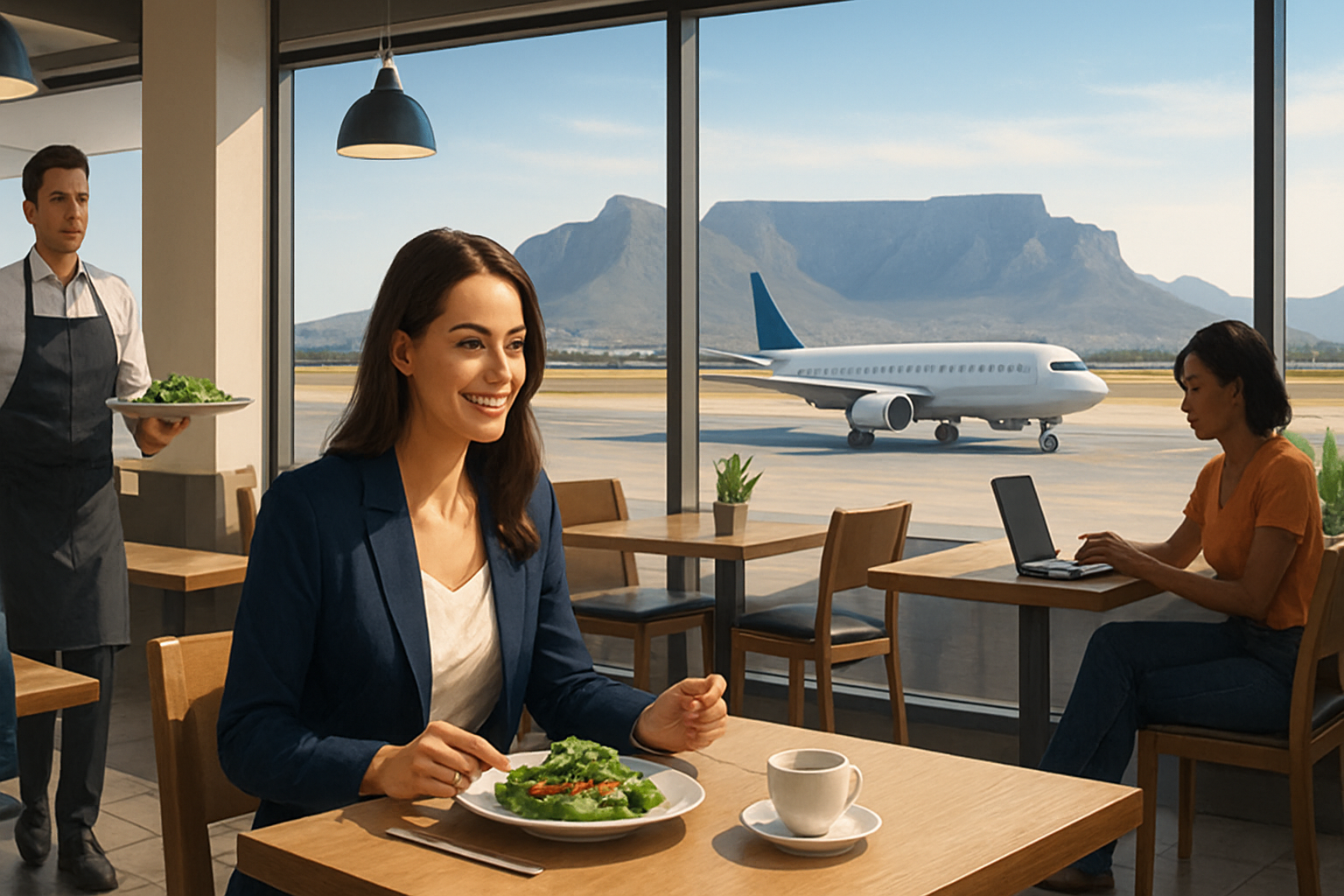
Airport Restaurants Cape Town: The AI Playbook Local Businesses Can Use to Grow, Save Time, and Boost Revenue
Introduction
Cape Town International Airport is a fast-moving marketplace where time, attention, and appetite collide. One hour it’s a calm morning; the next hour, flights bunch up, queues form, and kitchens run hot. For owners and managers, these swings can break margins, drain teams, and invite negative reviews. If this sounds familiar, you’re not alone. Airport restaurants Cape Town face the same challenge as many local businesses: unpredictable demand, tight staffing, and customers who expect speed, quality, and convenience—every time.
The good news? You don’t need to guess anymore. Practical AI—paired with the systems you already use—can help forecast demand, schedule better, reduce food waste, optimize menus, and respond to reviews faster. In this guide, we’ll show how airport restaurants cape town can apply AI today, and how the very same playbook works for clinics, real estate agencies, retail stores, and salons that want to make smarter decisions, protect margins, and grow.
Why Airport Restaurants Cape Town Matter for Local Businesses
Airports amplify what every local business experiences: volatile foot traffic, high expectations, and intense competition. If an airport eatery can deliver at peak time with limited staff, any business can learn from that discipline.
- Demand is spiky. Flight delays, weather, events, and holidays send waves of customers in minutes. AI can help you prepare without overstaffing.
- Customers are rushed and impatient. They want clear options, fast checkout, transparent pricing, and predictable wait times—lessons that apply to retail, healthcare check-ins, and even salon bookings.
- Reviews travel far. A single bad experience at Cape Town International Airport can hit Google Maps, TripAdvisor, and social media within hours. AI-driven monitoring and rapid response protect reputation and revenue.
- Margins are thin. Every wasted ingredient, idle staff hour, or unsold item costs more than it should. Forecasting and automation fix the leaks.
Whether you run a restaurant near the terminal, a clinic serving travelers, a real estate office welcoming relocating families, or a boutique in the CBD, the same AI-powered methods—forecasting, scheduling, pricing, and review management—can lift performance.
How AI Is Transforming Airport Restaurants Cape Town
Here’s how practical AI shows up in day-to-day operations at Cape Town International Airport (CPT) and beyond:
- Demand forecasting by time block: Machine learning models analyze historical sales, flight schedules, public holidays, weather, and events to predict hourly covers and item-level demand. Output: precise prep lists and smarter purchasing.
- Labor scheduling: Tools forecast the labor needed by hour and match shifts accordingly, reducing overtime and idle time. You get the right people at the right time.
- Inventory optimization and waste reduction: AI helps plan orders, track usage, and flag anomalies. You buy what you’ll actually sell—less spoilage, more profit.
- Menu engineering: Analytics surface high-margin and high-velocity items. Dynamic menus (e.g., breakfast skew earlier on Monday; grab-and-go upsells before evening departures) improve profitability.
- Queue and wait-time management: Computer-vision footfall counters and POS timestamps estimate queue times in real time. Displaying wait times reduces anxiety and cart abandonment.
- Reputation and sentiment analysis: Automated monitoring of Google, TripAdvisor, Facebook, and Instagram flags issues early (e.g., “under-seasoned fries” or “card terminal slow”). Rapid responses turn near-misses into wins.
- Multilingual support: Airports attract global travelers. AI-powered translation for menus and signage lowers friction and helps international guests order quickly and confidently.
- Smarter ads and targeting: Geofenced Google Ads and Meta Advantage+ campaigns reach travelers and airport staff with time-sensitive offers (e.g., “Skip the queue—order ahead”) during peak windows.
These capabilities are not theory; they’re already embedded in modern POS, reservations, and analytics platforms used by restaurants and local retailers worldwide.
Best AI Tools for Airport Restaurants Cape Town
You don’t need to build anything from scratch. The following real tools can help airport restaurants and similar local businesses implement AI quickly:
- Google Business Profile (Maps + Search): Manage opening hours, menus, photos, and respond to reviews. Insights reveal when customers visit and how they find you. Boosts local SEO and discoverability in the terminal area.
- Dineplan (SA): Reservations, waitlists, and guest data with reporting. Useful for pre-flight bookings and managing surges during peak departure banks.
- Lightspeed or Toast POS: Modern POS platforms with analytics and integrations for inventory, menu engineering, and labor reporting. Useful for understanding item margins and performance by hour.
- Yoco (SA) + Yoco POS: Simplifies payments with sales insights and basic analytics—great for kiosk and grab-and-go counters.
- Tenzo: Restaurant analytics and AI forecasting platform that connects POS, inventory, and labor data to improve scheduling, ordering, and sales predictions.
- V-Count or RetailNext: Footfall and queue analytics using sensors/computer vision. Estimate conversion rates, dwell time, and real-time capacity.
- ReviewTrackers or Reputation: Consolidate reviews from Google, TripAdvisor, Facebook, and more. AI sentiment clustering highlights recurring issues to fix first.
- Sprout Social or Talkwalker: Social listening with sentiment and topic analysis to spot trends (“coffee quality”, “vegan options”, “socket availability”).
- Google Ads (Smart Bidding) + Meta Advantage+: Automated campaign optimization for time-of-day, device, and location targeting. Great for pushing pre-flight promotions or post-security offers.
- Mr D Food and Uber Eats: Delivery marketplace presence for airport-adjacent locations and city outlets; data helps identify top sellers and prep windows.
- Apicbase: Food cost and inventory management with recipe and waste tracking, helping reduce shrinkage and standardize prep.
- 7shifts: Labor scheduling optimized by forecasts; minimize overtime and fill shift gaps automatically.
Pick what fits your stack. Start with your POS and review platforms, then add forecasting and footfall as you scale.
Step-by-Step Guide to Using AI in This Industry
Use this blueprint to roll out AI with minimal disruption:
1) Define outcomes that matter
- Examples: Reduce food waste by 20%, cut average queue time to under 5 minutes, lift average order value (AOV) by 10%, improve review response time to under 2 hours.
2) Baseline your metrics
- Pull the last 8–12 weeks of data from POS, labor, and inventory. Note covers by hour, item mix, prep time, staff hours, refund reasons, complaints.
3) Clean and connect your data
- Ensure accurate SKUs, standardized menu items, and consistent staff role names. Connect POS, inventory, and scheduling tools to a central dashboard (e.g., Looker Studio, Power BI, or Tenzo).
4) Forecast demand by hour
- Use your POS/analytics platform’s forecasting to predict covers and item demand for each daypart. Align kitchen prep, par levels, and delivery orders to forecasts.
5) Right-size staffing with AI scheduling
- Sync forecasts to your scheduling tool (e.g., 7shifts). Auto-build rosters by predicted rush windows (e.g., 06:00–09:00 domestic departures) and add on-call shifts for irregular operations.
6) Engineer your menu for margin and speed
- Identify high-margin, fast-to-prepare items. Feature them on digital boards during peaks. Bundle grab-and-go items with beverages for a modest upsell.
7) Instrument footfall and queues
- Add a counter (V-Count or similar) at entrance and POS. Track conversion rate (entrances to orders) and average wait time. Display estimates on signage to reduce perceived wait.
8) Tighten inventory and prep
- Sync forecasts with ordering (Apicbase). Automate prep lists and batch production for known rushes. Track waste codes (e.g., expired dairy, over-prep) and fix root causes.
9) Launch targeted micro-campaigns
- Run Google Ads in a 1–3 km radius around CPT with Smart Bidding. Message examples: “Order ahead—ready in 7 minutes,” “Breakfast bundle before security,” “Fast espresso at Gate X.”
10) Monitor reviews and sentiment daily
- Connect ReviewTrackers. Create response templates for common issues. Route recurring complaints (e.g., “card terminal slow”) to ops with a 24-hour fix SLA.
11) Iterate weekly
- Review a simple scorecard: sales vs. forecast, labor cost %, waste %, queue time, AOV, review score, top 3 issues. Adjust schedules, menu placement, and prep.
This same framework maps to clinics (appointment forecasts and staffing), real estate (lead scoring and follow-up), retail (merchandising and footfall), and salons (online bookings and no-show reduction).
Real-World Example or Case Study
Case: “Table Mountain Bites” (composite example), a quick-service brand inside Cape Town International Airport.
Starting point
- Average review rating: 3.9
- Queue time: 9–14 minutes at peaks
- Waste: 8% of weekly COGS
- AOV: R112
Actions
- Connected Lightspeed POS to Tenzo for hourly forecasting; aligned prep and ordering.
- Implemented V-Count sensor at entrance; displayed real-time “Approx. 5–7 min wait” on a small screen.
- Reworked digital menu boards to feature a “Rapid Breakfast Combo” and “Express Flat White” during morning peaks.
- Switched to 7shifts for labor; added two 2-hour micro-shifts during heavy departure windows.
- Centralized reviews with ReviewTrackers; created response templates; resolved repeated “card terminal slow” issue by upgrading connectivity and adding Yoco backup.
Results after 8 weeks
- AOV up 12% (R125) driven by bundles and better menu placement.
- Queue time down 28% to 6–9 minutes from entry to payment.
- Waste down 30% from baseline through forecast-aligned prep.
- Reviews improved to 4.3 average, with “fast service” mentioned 2.1x more often in sentiment analysis.
Transferable lesson: These gains came from existing systems, not custom code—proof that small, connected changes can compound into big outcomes.
Benefits of Using AI in Local Business
- Predictable staffing: Right-size teams for surges without burning payroll.
- Lower waste and stockouts: Order what you’ll use and avoid expensive shortages.
- Faster service and happier guests: Shorter queues and clear expectations increase throughput and tips.
- Higher margins: Prioritize high-contribution items and smart bundles.
- Stronger reputation: Monitor and respond to reviews quickly; fix systemic issues.
- Smarter marketing: Reach nearby customers at the right time with the right offer.
- Time saved: Automate reports, prep lists, and schedule building, so managers can coach teams and improve quality.
Common Mistakes to Avoid
- Flying blind without a baseline: Implementing tools before measuring current performance makes it hard to prove ROI.
- Data silos: POS, inventory, and labor systems not connected = conflicting numbers and poor decisions.
- Over-automation: AI should guide, not replace, human judgment—especially for guest recovery and service.
- Ignoring edge cases: Plan for irregular operations (weather, delays). Keep flexible staffing and prep buffers.
- Neglecting listings: Out-of-date Google Business Profile hours or menus frustrate travelers and tank ratings.
- Chasing vanity metrics: Focus on AOV, waste %, queue time, and review score—not just impressions and likes.
FAQs
1) How can airport restaurants in Cape Town predict rush periods accurately?
- Combine POS history with known flight banks, holidays, and weather. Use forecasting tools (e.g., Tenzo) that integrate these signals to predict covers and item demand by hour.
2) Do I need a data scientist to use AI?
- No. Many POS, scheduling, and analytics platforms include AI out-of-the-box. Start by enabling built-in forecasts and integrations, then layer more advanced tools if needed.
3) Can AI help with multilingual menus for international travelers?
- Yes. Use reputable translation tools to localize digital menus and signage. Test with common traveler languages and keep phrasing simple to reduce ordering friction.
4) What KPIs should I track weekly?
- Sales vs. forecast, labor cost %, average order value, waste %, queue/wait time, review rating and response time, and top complaint themes.
5) What’s a realistic timeline to see results?
- Within 4–8 weeks you can typically reduce waste, stabilize staffing, and improve AOV and reviews—especially if you iterate weekly and act on the data.
Conclusion
Airport restaurants Cape Town operate at the sharp end of local commerce: unpredictable demand, high expectations, and thin margins. That’s exactly where AI shines. Start by clarifying outcomes, connecting the systems you already use, and turning on practical forecasting, scheduling, inventory, and review tools. The same playbook works for clinics, real estate teams, retail stores, and salons across the city. If you adopt even two or three of these steps this quarter, you’ll likely see faster service, happier customers, and healthier margins. Ready to test it? Pick one location, one metric, and one tool—and begin.
Sources & References:
- https://www.mckinsey.com/capabilities/quantumblack/our-insights/the-state-of-ai-in-2023-generative-ais-breakout-year
- https://support.google.com/business/answer/3038177
- https://www.lightspeedhq.com/pos/restaurant/
- https://www.tenzo.co/
- https://v-count.com/
- https://help.uber.com/merchants-and-restaurants/article/about-uber-eats-merchant-tools?language=en