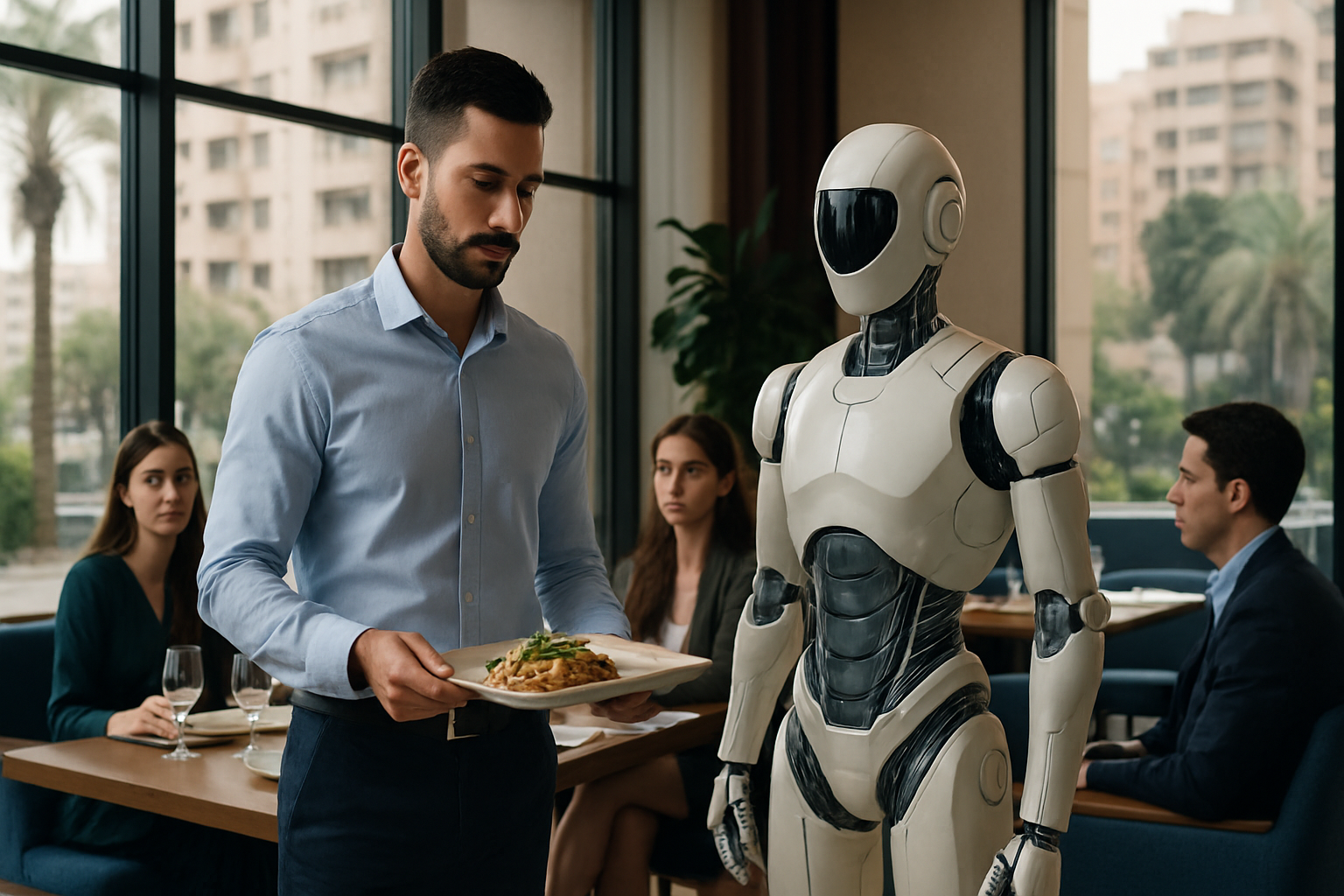
AI Restaurant Beirut: A Practical Guide for Local Owners to Drive Bookings, Reduce Waste, and Grow Revenue
Introduction
Beirut’s restaurant scene is vibrant—full of neighborhood favorites, family kitchens, and creative bistros that survive on repeat customers and word-of-mouth. But the last few years have tested even the strongest brands. Rising costs, unpredictable footfall, and staffing challenges make every shift a balancing act. If you’ve ever stared at a half-empty dining room on a Thursday or thrown away produce you couldn’t sell over the weekend, you’re not alone. This is exactly where AI can help. Whether you run a casual shawarma spot in Hamra, a bakery in Achrafieh, or a fine-dining concept on the Corniche, the right tools can turn data into decisions—without hiring a data team. In this guide, we’ll break down how to use AI restaurant Beirut strategies to improve reservations, sharpen menu pricing, reduce food waste, and deliver faster service. We’ll cover real tools, real workflows, and a local-minded approach so you can take action immediately and see measurable results in weeks—not months.
Why “AI Restaurant Beirut” Matters for Local Businesses
- The real problem: local owners juggle too much. Inventory is guessed. Promotions are last-minute. Staff schedules are reactive. Reviews are read, but patterns get missed.
- The opportunity: AI turns daily operational noise into signals. You can predict busy nights, schedule smarter, reduce spoilage, and personalize marketing.
- Competitive edge: While national chains already invest in analytics and automation, independent Beirut restaurants can now access the same capabilities at a fraction of the cost—often built into the POS or reservation tools you already use.
- What it looks like in practice: Your system forecasts Friday demand, alerts you to an overstock of tomatoes, suggests a Caprese special to move inventory, and auto-notifies your audience on Instagram and WhatsApp. Staff show up to a plan. Guests get a consistent experience. Revenue goes up.
How AI Is Transforming Restaurants in Beirut
In one sentence: AI helps restaurants predict demand, personalize guest experiences, automate busywork, and make smarter decisions faster.
Key transformation areas:
1) Demand forecasting: Tools analyze historical sales, seasonal trends, holidays, weather, and events to predict covers and menu item performance. Outcome: right staffing, accurate prep, lower overtime, and fewer stockouts.
2) Smart reservations and seating: AI-driven reservation systems optimize seating layouts, pacing, and turn times. Outcome: higher table utilization without rushing guests.
3) Menu engineering: Identify high-margin winners, remove underperformers, and experiment with bundles. Outcome: better profitability per cover.
4) Waste reduction: Predictive purchasing and dynamic prep cut food waste by aligning inventory to forecasted demand. Outcome: improved margins and sustainability.
5) Marketing automation: Personalized campaigns trigger based on behavior—birthdays, lapsed diners, or fans of a specific dish. Outcome: higher repeat visits and larger average tickets.
6) Service automation: Chatbots answer FAQs, manage bookings, and route delivery queries. Outcome: fewer phone interruptions, faster responses, and happier guests.
7) Review and sentiment analysis: AI summarizes reviews from Google and Instagram to surface themes (service speed, dish consistency, ambiance). Outcome: fix what matters first.
Best AI Tools for Restaurant Use Cases
Note: Choose tools that integrate with your current POS/reservation stack for clean data and less manual work.
- Toast POS (with xtraCHEF by Toast): POS plus back-office automation; offers sales analytics, invoice digitization, and food cost insights. Ideal for US/EU-style stacks increasingly used regionally.
- Square for Restaurants: POS with reporting, item-level analytics, and staffing insights; strong for small teams and pop-ups.
- Lightspeed Restaurant: Cloud POS with menu engineering and multi-location analytics; great for cafes and bistros.
- SevenRooms: CRM-driven reservations and guest experience platform; powerful for personalized marketing, VIP tagging, and automated campaigns.
- OpenTable for Restaurants: Reservations, table management, pacing control, and demand insights; well-known marketplace effect.
- Deliverect: Aggregates delivery platforms into your POS, centralizes menus, and provides performance analytics; reduces tablet chaos and improves prep timing.
- MarketMan: Inventory and purchasing management with forecasting to reduce waste and stockouts.
- xtraCHEF by Toast: Invoice processing, recipe costing, and margin analysis to keep food costs in line.
- Sprout Social or Hootsuite: AI-assisted social scheduling and listening to spot trends and measure campaign impact.
- Google Business Profile + Messaging: Automate responses for FAQs and route booking requests; critical for local SEO and discovery.
- Dialogflow or Tidio: Build AI chat experiences on your website or Facebook/Instagram to answer menu questions, capture bookings, and handle basic support.
- Zapier or Make: Connect POS, reservations, and marketing tools; automate tasks like sending a WhatsApp reminder 3 hours before a reservation or logging VIP notes to CRM.
Step-by-Step Guide to Using AI in This Industry
Follow this 30–45 day playbook to move from ideas to results.
Step 1: Define the goals that matter
- Pick 2–3 hard metrics: increase Friday covers by 15%, cut food waste by 20%, reduce no-shows by 30%.
- Assign owners: manager for reservations, head chef for inventory, marketing lead for CRM campaigns.
Step 2: Audit your current stack
- POS: identify whether you use Toast, Square, Lightspeed, or another system; confirm reporting modules.
- Reservations: OpenTable or SevenRooms? Ensure pacing and table optimization features are enabled.
- Delivery: use a consolidator like Deliverect to centralize data.
- Marketing: verify access to Facebook/Instagram, WhatsApp Business, email tools, and Google Business Profile.
Step 3: Clean your data
- Standardize dish names across POS, menu, delivery apps.
- Ensure modifiers (extra cheese, no onions) are structured—this improves forecasting.
- Tag guests where possible: family, corporate, VIP, dietary preferences.
Step 4: Turn on demand forecasting
- In your POS or analytics tool, enable daily/weekly forecasting dashboards.
- Review three insights: busiest hours by day, top-selling items by margin, and average party size per time slot.
- Action: adjust reservations pacing and staff schedule for the next two weekends.
Step 5: Optimize reservations and reduce no-shows
- Enable automated confirmation messages via SMS/WhatsApp 24 hours and 3 hours before bookings.
- Use deposits for peak times if culturally and operationally suitable; otherwise, double-confirm and mark high-risk no-show segments.
- Adjust pacing rules: increase table holds by 5–10 minutes during peak to avoid bottlenecks.
Step 6: Use AI for menu engineering
- Pull item-level profitability: food cost %, contribution margin, and sales velocity.
- Promote high-margin items through server suggestions and menu placement; demote or rework low performers.
- Test a weekly special based on surplus ingredients flagged by inventory tools.
Step 7: Personalize marketing
- Create 3–5 segments: lapsed 60-day diners, families, lunch regulars, VIPs.
- Automate drip campaigns: a comeback offer for lapsed guests, a family combo for weekends, or a weekday business lunch promo.
- Sync campaigns to predicted slow periods from your forecast.
Step 8: Implement a simple AI chatbot
- Add a website or Instagram/Facebook Messenger bot with Dialogflow or Tidio.
- Script top FAQs: hours, location, menu highlights, dietary info, reservation link, delivery options.
- Route complex queries to a human with a 5–10 minute SLA during opening hours.
Step 9: Reduce waste with inventory logic
- Set par levels that adjust based on the 7-day forecast.
- Receive low-stock and overstock alerts; create specials to move soon-to-expire items.
- Track waste by category weekly and aim for a 10–20% reduction by week 6.
Step 10: Measure, learn, repeat
- Weekly 30-minute review: covers vs. forecast, top 5 dishes by margin, no-show rate, and campaign ROI.
- Celebrate quick wins to build team buy-in.
Real-World Example: A Beirut Bistro’s 45-Day AI Turnaround
Business: “Gemmayzeh Garden” (fictional but realistic) — 60 seats, Mediterranean fusion, dine-in + delivery, bilingual Arabic/English service.
Challenges
- Friday demand swings: fully booked one week, half-empty the next.
- Frequent waste: herbs and fresh produce discarded on Mondays.
- High no-shows: 18% on peak nights.
- Marketing strain: owner writing posts late at night, little segmentation.
What they implemented (Days 1–45)
- Forecasting via POS analytics to spot peak hours and underperforming days.
- SevenRooms for reservations and CRM tagging (vegetarian, birthday, VIPs, business lunch).
- Deliverect to centralize delivery menus and timing.
- MarketMan for inventory forecasting and par controls.
- Automated WhatsApp reminders for reservations and a follow-up “rate your visit” flow.
- Social scheduling via Hootsuite with best-time posting based on engagement insights.
Results by week 6
- No-shows dropped to 9% (from 18%) after adding reminders and a soft deposit on peak hours.
- Food waste cut by 22% through better par levels and a “Chef’s Herb Mezze” special on Sundays.
- Friday covers rose 14% by optimizing pacing and time slots based on historical turn times.
- Average order value up 11% with menu engineering: pushing profitable mezze bundles and a signature mocktail.
- 2 hours per day saved answering FAQs thanks to a simple website chatbot routing to human when needed.
Benefits of Using AI in Local Business
- Higher occupancy and steadier demand via smarter reservations and offers.
- Lower food costs with accurate purchasing and prep planning.
- Faster service and fewer mistakes through automated FAQs and order routing.
- Better guest loyalty with personalized communications and VIP recognition.
- Clear decisions with dashboards that highlight what matters right now.
- Time saved for owners and managers—focus on team, food, and guest experience.
Common Mistakes to Avoid
- Buying too many tools: pick 1–2 core platforms that integrate with your POS before adding more.
- Messy data: inconsistent dish names and modifiers break analytics; clean data first.
- Ignoring team training: show servers how suggestions and specials support tips and guest happiness.
- Over-automation: keep a human touch for VIPs, complaints, and nuanced dietary needs.
- Measuring vanity metrics only: focus on covers, margin, waste, no-shows, and repeat rate.
FAQs
1) What does “ai restaurant beirut” actually mean for a small eatery?
It refers to applying practical AI tools—like forecasting, smart reservations, and chatbots—to run a Beirut restaurant more efficiently, cut waste, and grow revenue without adding headcount.
2) How fast can a local Beirut restaurant see results from AI?
Most owners see quick wins within 30–45 days, especially in reduced no-shows, better staffing alignment, and lower waste; deeper gains in loyalty and margin follow over 60–90 days.
3) Do I need a developer to set this up?
Not necessarily. Many POS, reservation, and inventory platforms include built-in AI or plug-and-play integrations. For custom chat flows or WhatsApp automations, a freelancer can help you configure in days, not months.
4) Will AI replace my staff?
No. It augments your team by removing guesswork and repetitive tasks—so hosts focus on guests, chefs on quality, and managers on coaching and consistency.
5) How does AI help with local SEO and discovery in Beirut?
Keep your Google Business Profile updated, enable messaging, respond to reviews, and use structured menus. AI tools can suggest best posting times, summarize reviews for action, and automate timely replies—boosting visibility and clicks.
Conclusion
For owners searching “ai restaurant beirut,” the goal isn’t hype—it’s control. AI helps you see the night ahead, seat smarter, prep right, and bring guests back with thoughtful, timely messages. Start with forecasting, reservations, and inventory. Clean your data, automate your reminders, and measure what matters. Within weeks, you’ll feel the difference on the floor and in your P&L. If you’re ready to pilot a lean AI blueprint tailored to your concept and neighborhood, map your next 45 days and pick the one improvement that will move the needle most. Your team—and your guests—will feel it.
Sources & References:
- https://www.mckinsey.com/industries/retail/our-insights/how-analytics-and-ai-are-revolutionizing-the-retail-industry
- https://hbr.org/2020/02/using-ai-to-put-your-data-to-work
- https://pos.toasttab.com
- https://www.sevenrooms.com
- https://squareup.com/us/en/solutions/restaurants
- https://deliverect.com