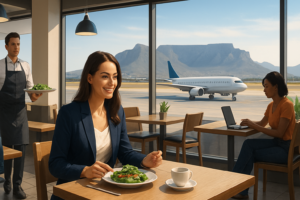
How an Airport Restaurant and Gin Mill Can Use AI to Boost Revenue, Reviews, and Repeat Guests
Introduction
If you run or plan to launch an airport restaurant and gin mill, you know the highs and lows can hit in the same afternoon. One moment a flight delay packs your dining room and bar, the next a gate change empties it. Staff schedules, perishable inventory, online reviews, and tourist demand make profitability a moving target. The good news: local businesses like yours can now use practical AI to forecast traffic, optimize menus, automate follow-ups, and turn unpredictable days into dependable margins. In this guide, we’ll break down how an airport restaurant and gin mill can apply AI to attract more “near me” searches, seat guests faster, sell smarter at the bar, and build a loyal base of repeat locals and travelers—without adding complexity to your day.
Why an Airport Restaurant and Gin Mill Matters for Local Businesses
Quick answer: An airport restaurant and gin mill is a hyper-local, high-visibility hospitality hub where timing, reviews, and operations are everything. Done right, it becomes a profit engine that also feeds nearby businesses with foot traffic and credibility.
- Problem: Demand is volatile. Flights, weather, and events can swing your traffic by 30–60% day to day. Waste or labor misalignment crushes margins.
- Opportunity: AI turns unpredictability into patterns you can plan for—predicting peak windows, staffing correctly, keeping the right SKUs in stock, and personalizing offers.
Why it also matters beyond your door:
- You’re a first and last impression for the region. Stellar service and fast experiences elevate the entire airport’s reputation, helping nearby retailers and services.
- Travelers research on mobile. If you dominate Google Maps, Yelp, and TripAdvisor with great photos, menus, and reviews, you capture “airport bar,” “gin cocktail,” and “food near Gate X” intent—traffic that might otherwise pass you by.
How AI Is Transforming Airport Restaurant and Gin Mill Operations
AI isn’t a buzzword—it’s a set of practical tactics that local operators can use today:
- Demand forecasting tied to flights and weather: Predict guest counts by aligning POS history with flight schedules, delays, and rain/snow forecasts. That means smarter prep, accurate labor, and less waste.
- AI-informed menu engineering: Identify your true stars, puzzles, and dogs based on contribution margin, prep time, and attachment rates (e.g., which gin cocktails increase appetizer sales). Use that insight for menu design and server prompts.
- Dynamic promotions, not surprise pricing: Create smart happy-hour windows or “delay specials” aligned to actual demand curves. Keep prices consistent; use time-limited offers to steer guest flow and increase check size.
- Inventory optimization: Bar programs bleed cash via over-pours and dead stock. Computer-vision or smart-scale tools flag anomalies, forecast depletion, and ensure your best-selling gins and garnishes never run out before the evening rush.
- Review and reputation intelligence: AI sentiment analysis spots recurring issues (e.g., “slow service at the bar after 8 pm” or “love the Aviation cocktail”). Fix root causes and turn 3-star experiences into 5-star advocates.
- Smarter ad spend: Machine-learning ad platforms automatically test creative, audiences, and times of day, funneling budget to what converts (e.g., “pre-flight brunch,” “layover lunch,” “craft gin bar”).
- Service automation that feels human: Automated replies for FAQs (parking, hours, gluten-free options), waitlist updates, and reservation confirmations reduce phone time, keep guests informed, and boost show-up rates.
Best AI Tools for Airport Restaurant and Gin Mill Owners
These are established, real platforms that bring AI-powered features your team can use without a data science background:
- Toast (POS + Analytics + xtraCHEF): Centralizes sales, labor, and inventory with forecasting and automated food cost insights. Integrations support menu engineering and real-time item performance.
- Square for Restaurants or Lightspeed (Upserve): POS with strong analytics. Identify peak times, staff performance, and profitable menu items; automate discounts and loyalty.
- 7shifts: AI-assisted labor scheduling that aligns staffing with forecasted demand. Reduces overtime, improves coverage, and adapts to last-minute traffic spikes.
- MarketMan or Apicbase: Inventory and recipe management with forecasting and cost control. Ideal for bar and kitchen sync, helping you prevent 86’d items and shrinkage.
- WISK.ai: Popular with bars for automated bar inventory, recipe costing, and pour variance analysis—excellent for a gin-forward program.
- SevenRooms or OpenTable (Restaurant): Reservation, waitlist, and guest CRM with AI-enhanced seating optimization and automated guest communications to reduce no-shows.
- Birdeye or Podium: Review management with AI sentiment insights and automated review invites post-visit. Boosts Google Maps ranking and conversion.
- Google Ads (Performance Max) and Meta Advantage+: Use machine learning to auto-optimize local ads by audience and creative. Drive “near me” searches, map clicks, and reservations.
- BrightLocal or Yext: Local listings and citation management to standardize NAP (name, address, phone), photos, and menus across Google, Yelp, TripAdvisor, Apple Maps, and more—critical for airport searches.
- Sprout Social or Hootsuite: Plan content, track engagement, and benchmark best-performing posts. Use AI cues for timing and message optimization.
- Olo (or your POS’s native online ordering): Streamlined takeout for airport staff, pilots, and FBO partners with automated upsells.
Step-by-Step Guide to Using AI in This Industry
1) Set your top three quarterly goals
- Examples: Raise weekday bar revenue by 12%, reduce food waste by 15%, increase 4–5 star Google reviews by 30%.
- Tie each goal to a single metric and owner.
2) Connect your data and clean it
- Ensure your POS, reservations, and online ordering use unified product names and categories (e.g., standardize “G&T, Gin & Tonic, Gin and Tonic”).
- Sync platforms so sales, labor, and inventory reconcile daily.
3) Optimize your Google Business Profile for “near me” wins
- Add airport terminal/gate references, parking details, and a “fast-layover lunch” note.
- Upload professional photos of your bar, top gin cocktails, and menu highlights. Answer FAQs.
- Turn on messaging and set automated, friendly replies for hours, reservations, and dietary options.
4) Turn on demand forecasting
- Use POS analytics plus 7shifts (or equivalent) to forecast covers by daypart.
- Layer in weather and local events. If possible, note flight banks and typical delay windows to refine forecasts.
5) Engineer the menu using data
- Identify high-margin items with strong attachment rates (e.g., house gin flight that drives appetizer orders).
- Promote stars with design: placement, visual cues, and short, descriptive copy.
- De-list items with low margin and low demand—or reposition them as limited-time features.
6) Right-size inventory and reduce bar variance
- Implement weekly cycle counts for key spirits and high-cost ingredients.
- Use MarketMan/Apicbase or WISK.ai to flag anomalies (over-pours, missing bottles) and forecast orders.
7) Automate review generation and response
- Trigger post-visit texts or emails via SevenRooms/OpenTable or your POS CRM.
- Birdeye/Podium routes happy guests to Google; alert staff to 1–3 star feedback for quick recovery.
8) Launch always-on local ads with clear offers
- Google Performance Max: Target “airport restaurant,” “gin bar near me,” and “pre-flight brunch.”
- Meta Advantage+: Carousel of top cocktails, gin flights, and a “delay-day happy hour.”
- Measure cost per reservation, not just clicks.
9) Personalize offers by context
- Create “pilot/staff lunch” combos or “layover 45-min menu.”
- During delays, automatically push drink-and-snack bundles to walk-ins and your followers.
10) Train your team to use insights
- Brief bartenders and servers on the week’s push items and talking points.
- Post one-page dashboards in the back-of-house with forecasted covers, specials, and 86 risks.
11) Review weekly, refine monthly
- Hold a 20-minute review: targets vs. actuals, top 3 wins, top 3 fixes.
- Kill underperforming promos quickly; scale what works.
Real-World Example or Case Study
Business: “Runway Tavern & Gin Mill,” a 70-seat, aviation-themed bar and kitchen located landside at a regional airport with seasonal tourist traffic.
Challenges
- Inconsistent weekday lunch traffic and late-evening bar dips
- High bar variance from over-pours and manual counts
- Mixed reviews citing slow service during flight delays
AI Plan and Tools
- POS + Analytics: Toast and xtraCHEF for item-level margin tracking
- Labor Forecasting: 7shifts integrated with POS sales patterns
- Inventory Control: WISK.ai for bar counts and variance alerts
- Reservations/CRM: SevenRooms for waitlist automation and post-visit review prompts
- Local Ads: Google Performance Max and Meta Advantage+ with delay-day creatives
- Listings: BrightLocal for NAP and menu consistency
What They Did
- Implemented a 45-minute “Layover Lunch” menu highlighted in Google Business Profile and ads. Kitchen flow re-sequenced based on AI-predicted peak times.
- Introduced a rotating “Runway Gin Flight” program engineered for 75% gross margin with suggested pairings (herb fries, olives board). Servers received prompts on tablets.
- Set up variance alerts for top 12 spirits; bartenders retrained on pours and jigger policy.
- Automated review invites two hours post-visit; manager notified of sub-4-star responses with a same-day recovery script.
Results after 90 days
- Average check up 11.8% (gin flight attachment rate reached 22%)
- Bar variance reduced by 34%, saving approximately $1,150/month
- Google ratings improved from 4.1 to 4.4, with review volume up 52%
- Weekday lunch covers up 19% from “Layover Lunch” and map-pack visibility
- Labor cost as % of sales down 2.3 points due to tighter scheduling vs. demand
Benefits of Using AI in Local Business
- Predictable staffing: Schedule to demand curves, cut overtime, and maintain service quality.
- Higher margins per guest: Promote profitable cocktails and bundles using menu intelligence.
- Lower waste and shrink: Forecast ordering and spot over-pours early.
- Faster table turns with happier guests: 45-minute, delay-friendly menus reduce anxiety and boost reviews.
- Stronger local SEO: More 4–5 star reviews, better photos, and consistent listings lift your Maps ranking.
- Smarter ads: Spend shifts automatically to what drives reservations and walk-ins.
- Repeat business: Personalized offers for airport staff and frequent travelers through CRM segmentation.
Common Mistakes to Avoid
- Chasing vanity metrics: Optimize for reservations, covers, and margin—not impressions or likes.
- Overcomplicating tools: Start with POS analytics, scheduling, inventory, and reviews before exotic add-ons.
- Ignoring data hygiene: Inconsistent item names break reports and confuse forecasting.
- “Set and forget” ads: Review creative and offers monthly; align to seasonality and flight schedules.
- Surprise pricing: Use transparent, time-bound promotions (e.g., happy hour), not sudden price swings that erode trust.
- Skipping staff training: AI insights only work when your team understands how to act on them.
FAQs
1) How can an airport restaurant and gin mill predict traffic with enough accuracy to act on it?
- Combine POS history with weather and known flight banks. Even a basic model improves staffing and prep enough to cut waste and speed service. Add notes for holidays and events to refine further.
2) What’s a realistic budget to get started?
- Many operators start by upgrading POS analytics and scheduling tools ($200–$600/month total), then add inventory control or review platforms. Focus on ROI: a 2–3 point margin lift usually covers the stack.
3) Will AI replace my staff?
- No. AI augments your team—forecasting demand, highlighting profitable items, and automating routine messages—so staff can focus on hospitality and speed.
4) Is dynamic pricing safe for hospitality?
- Use dynamic promotions rather than changing list prices. Time-bound offers (e.g., delay specials) steer demand without confusing guests or risking backlash.
5) How do I improve Google Maps visibility quickly?
- Ensure listings are complete with airport-specific details, upload high-quality photos, keep hours accurate, and automate review invites after visits. Respond to all reviews within 48 hours.
Conclusion
Running an airport restaurant and gin mill doesn’t have to feel like guessing against the clock. With a focused AI toolkit—demand forecasting, menu engineering, inventory control, review automation, and smart local ads—you can stabilize labor, lift margins, and turn unpredictable flight days into reliable revenue. Start small: connect your data, optimize your Google profile, and pilot one high-margin signature gin program with clear promos. Then iterate. If you want help mapping the first 90 days for your airport restaurant and gin mill, reach out for a tailored plan and tool stack built around your goals, budget, and guest profile.
Sources & References:
- https://restaurant.toasttab.com/
- https://www.sevenrooms.com/
- https://support.google.com/business/
- https://brightlocal.com/research/local-consumer-review-survey/
- https://www.mckinsey.com/capabilities/growth-marketing-and-sales/our-insights/the-state-of-ai-in-2023
- https://www.marketman.com/