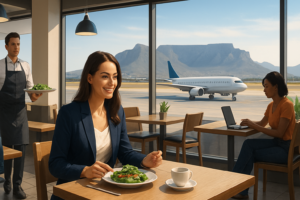
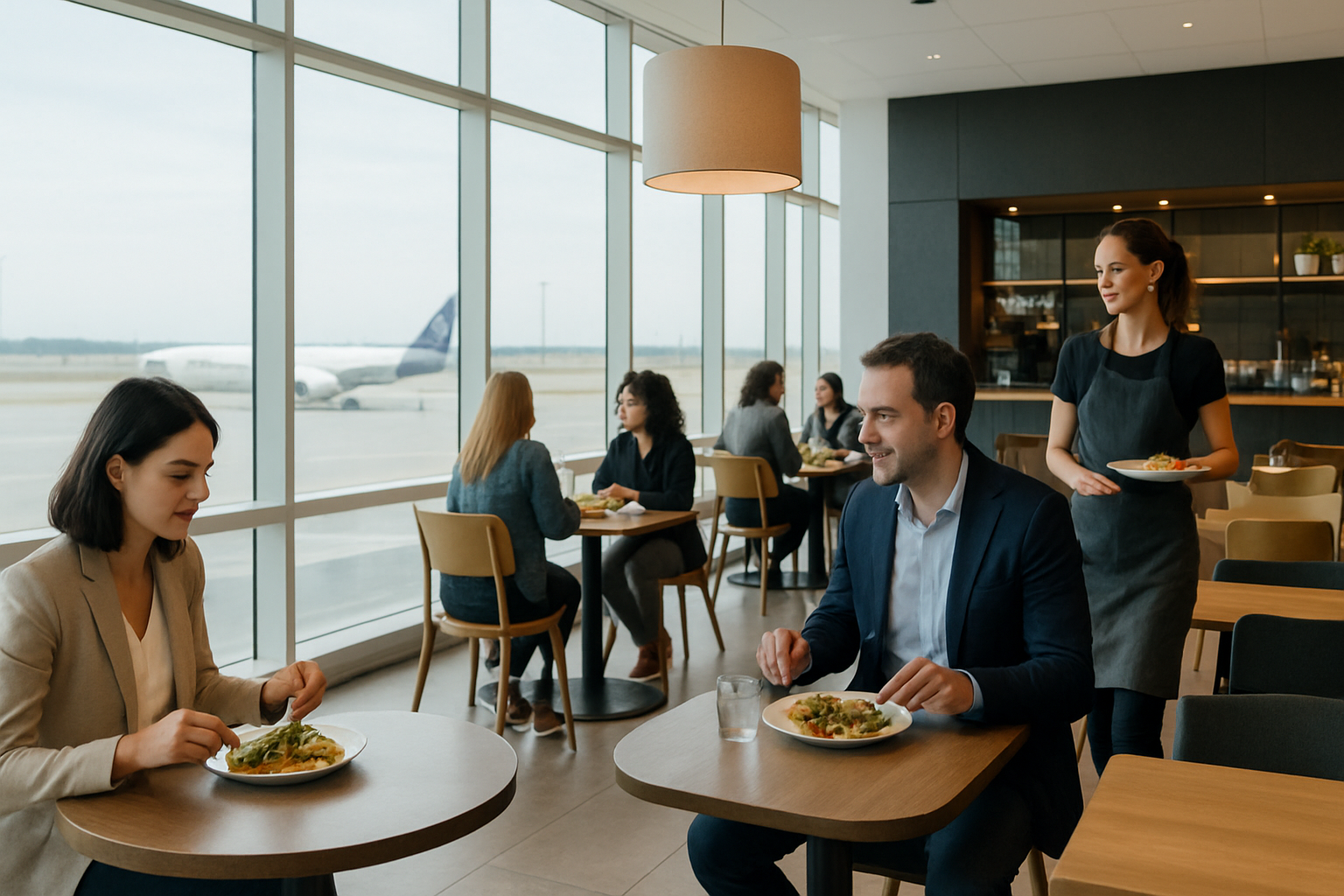
Airport Restaurants Adelaide: An AI Playbook to Win More Customers, Faster Service, and Higher Margins
Introduction
Travelers don’t plan their hunger around your roster. Flights run early, late, and in clusters, and suddenly your counter is swamped—or quiet. If you run or market airport restaurants Adelaide businesses or nearby cafes, bars, and retail stores, this unpredictability can wreck margins, waste inventory, and frustrate customers who just want a quick, good meal. The good news: AI can make airport demand predictable, lines shorter, and marketing sharper. In this guide, I’ll show how local businesses—restaurants inside Adelaide Airport, coffee shops in Brooklyn Park, even beauty salons and retail near the terminal—can use practical, affordable AI tools to forecast demand, personalize offers, boost reviews, and turn rushed travelers into repeat local customers.
Why Airport Restaurants Adelaide Matters for Local Businesses
Adelaide Airport isn’t just a gateway; it’s a continuous stream of time-pressed, high-intent buyers. That means:
- Problem: Demand swings with flight schedules. Staff and stock get misaligned. Add in multi-lingual guests, unpredictable delays, and short dwell times, and service quality can suffer.
- Opportunity: Travelers, rideshare drivers, airline staff, and nearby workers offer recurring foot traffic. If you capture them with speed, convenience, and relevance, you can grow ticket size today and build future revenue tomorrow (think: re-marketing to locals after their trip).
- Spillover potential: Hotels, clinics, and real estate agents near the airport also benefit. When airport dining sets a high bar with convenience and data-driven personalization, the surrounding ecosystem rises—more visibility on Google Maps, stronger reviews, and referrals that stretch beyond the terminal.
How AI Is Transforming Airport Dining and Nearby Retail
AI isn’t sci-fi. It’s a set of tools that help you make smarter decisions in real time.
- Demand forecasting: Use past POS data, seasonality, and flight schedules to predict peak windows. That means smarter prep lists and less waste on perishable items like pastries and salads.
- Smart scheduling: Match staff to predicted peaks; auto-recommend breaks outside cluster times. With better labor deployment, customers see shorter lines and faster service.
- Menu engineering: Analyze what sells pre- and post-security, by time of day, and by weather. Feature “grab-and-go” best-sellers when flights cluster and higher-margin plates when people have more dwell time.
- Dynamic offers (with guardrails): Offer micro-promotions during slow windows (e.g., 10% off barista-made drinks from 2–3 p.m.). Keep pricing consistent and fair—focus on targeted bundles and loyalty bonuses rather than fluctuating base prices.
- Personalization: Recognize repeat customers via loyalty apps, email, or Wi‑Fi sign-ins. Offer relevant upsells—almond croissant to dairy-free coffee buyers; discounts on kids’ meals for family groups.
- Multilingual support: AI translation for menus and digital signage reduces friction for international travelers and boosts conversion.
- Social listening and review mining: Spot recurring complaints (e.g., “slow coffee line at Gate 18”) and fix them before they tank your rating.
- Geofenced ads that make sense: Trigger “pre-order and skip the line” messages to travelers arriving at the car park or descending at T1.
- Waste reduction: Predict demand for fresh items to cut spoilage; auto-adjust prep based on early-morning passenger surges.
Best AI Tools for Airport Restaurants Adelaide
Here are reliable, real-world platforms that small and local businesses can deploy quickly.
- Google Business Profile: Control how you appear on Google Maps and Search. Add accurate hours, photos, menus, and Posts for pre-order promos. Use Q&A and Messaging to address traveler questions fast.
- Google Analytics 4 (GA4): Track website and pre-order funnel performance. Connect to ad platforms to see which campaigns drive real sales.
- Google Ads (Performance Max): Reach high-intent searchers and map users with location extensions and store visit goals. Great for “near me” and “open now” moments.
- Meta Ads Advantage+: Automate creative and audience testing across Facebook and Instagram. Layer in geofences near T1 and the long-term car park.
- Square for Restaurants (or Lightspeed): POS with real-time sales analytics, inventory insights, and menu performance. Connect to loyalty, QR code menus, and online ordering.
- OpenTable or SevenRooms: Manage reservations, waitlists, table turns, and guest profiles. Use marketing automation to invite repeat visits when customers fly again.
- Uber Eats, DoorDash, Menulog: Extend reach to airport workers and nearby residents. Use data on top items and delivery windows to optimize production and offers.
- Sprout Social (or Hootsuite): Monitor social mentions, run social listening, and analyze sentiment. Identify service gaps and content that converts.
- Podium or Birdeye: Centralize reviews from Google and other channels. Automate review requests via SMS, respond quickly, and highlight keywords customers value.
- Google Dialogflow (or Intercom/Tidio chatbots): Build web or kiosk assistants for FAQs, language support, and pre-order flows. Shorter lines, happier customers.
- DeepL or Google Translate: High-quality translation for menus, signage, and customer support.
- Tenzo (or ClearCOGS): Restaurant forecasting and analytics that combine POS, labor, and inventory to predict demand and reduce waste.
Step-by-Step Guide to Using AI in This Industry
Follow this practical, low-risk roadmap.
1) Get your data foundations right
- Consolidate POS, online orders, and delivery data into one dashboard (Square/Lightspeed + Tenzo/GA4).
- Standardize product names and categories so analytics are clean (e.g., “Flat White 12oz,” not multiple variants).
2) Fix your Google visibility
- Claim and optimize Google Business Profile. Add menu links, photos, Attributes (e.g., “Takeout,” “Dine-in”), and airport terminal details.
- Post weekly specials and “skip the line” pre-order prompts. Enable Messaging.
3) Build a pre-order and pickup flow
- Enable online ordering with pickup zones clearly marked on maps and signage.
- Use QR codes at entrances and security to nudge “order ahead.” Test 5–10% off during shoulder times to smooth demand.
4) Forecast demand and schedule smarter
- Connect POS to a forecasting tool (Tenzo/ClearCOGS) or use built-in POS forecasts.
- Map peaks to roster templates. Add a “shock absorber” float role during flight clusters.
5) Engineer the menu for speed and margin
- Identify top sellers and high-margin pairings (coffee + pastry, breakfast wrap + juice). Promote bundles on digital boards when lines grow.
- Flag slow-prep items during extreme peaks; surface them when dwell time is higher (e.g., late evenings).
6) Personalize retention
- Launch a loyalty program (email/SMS via POS). Segment by time-of-day shoppers (early flyers vs. after-work locals) and send targeted offers.
- Set up abandoned-cart nudges for online pre-orders.
7) Multilingual and accessibility wins
- Translate menus into top languages for inbound routes. Offer tap-to-translate on digital menus.
- Ensure large-font, high-contrast digital boards for quick scanning.
8) Geofenced micro-campaigns
- In Google Ads and Meta Ads, target travelers and airport workers within a 1–3 km radius. Promote pre-order cutoffs (“Ready in 6 minutes at Gate X”).
- Schedule campaigns for peak clusters and adjust bids automatically with Performance Max.
9) Review and reputation management
- Trigger SMS review requests after purchase via Podium/Birdeye. Respond within 24 hours—especially to 3-star reviews (most recoverable).
- Mine review keywords to improve operations and SEO (“quick service,” “vegan options,” “near Gate 14”).
10) Continuous test-and-learn
- Pick one KPI per month: average ticket size, prep time, waste%, or review score.
- Run small A/B tests on offers, hero items, or pickup signage. Keep what works.
Real-World Example or Case Study
Runway Grounds (fictional), a café at Adelaide Airport T1, faced inconsistent mornings—some days packed at 6:30 a.m., others quiet until 8. Lines snaked past neighboring retailers, and waste from baked goods was high.
What they implemented
- POS + Forecasting: Connected Square for Restaurants to Tenzo. Forecasts updated hourly using same-day sales velocity and flight cluster patterns.
- Pre-Order + Geofence: Launched a “Skip the Line” page with QR codes at the car park shuttle stop and security exit. Ran Google Ads Performance Max with location extensions and a 1 km geofence.
- Menu Engineering: Promoted a “6-Minute Breakfast” bundle (egg wrap + small flat white) during peak windows. Slower items rotated into evening specials.
- Smart Scheduling: Introduced a floating barista role from 6:15–8:15 a.m. based on forecast peaks.
- Reputation Lift: Automated SMS review requests through Podium and spotlighted “gluten-free” and “plant-based” on menus after review analysis showed unmet demand.
Results after 12 weeks
- 22% faster average service time during morning peaks
- 15% increase in average ticket size from targeted bundles and add-on prompts
- 28% reduction in pastry waste by linking prep to forecasts
- 1.1★ improvement in Google rating (from 3.4 to 4.5), driven by speed and clarity
- 18% of sales via pre-order within 8 weeks, easing congestion and staffing stress
Takeaway: By aligning offers, staffing, and ads to demand signals, airport restaurants in Adelaide can turn rush hours into reliable revenue—without burning out staff or wasting stock.
Benefits of Using AI in Local Business
- Predictable revenue: See peaks coming; prep, staff, and promote accordingly.
- Higher margins: Push high-contribution bundles when throughput matters most.
- Less waste: Align production with real demand windows.
- Faster lines, happier guests: Queue-busting pre-orders and multilingual support.
- Better reviews and map visibility: Quick responses, targeted fixes, and strong visuals.
- Marketing that pays for itself: Geofenced ads and loyalty personalization reduce wasted spend.
- Scalable playbook: The same system helps nearby retailers, salons, and clinics manage demand, staffing, and reputation.
Common Mistakes to Avoid
- Chasing vanity metrics: Optimize for sales, service time, and review lift—not just clicks.
- Over-automation without guardrails: Keep humans in the loop for pricing ethics, service recovery, and hospitality.
- Messy product taxonomy: Inconsistent item names wreck analytics. Standardize SKUs.
- One-size-fits-all offers: Segment by time of day, traveler profile, and order channel.
- Ignoring review keywords: They’re free user research. Fix the root cause, then reply.
- Incomplete Google Business Profile: Missing hours, menus, or photos = lost sales.
FAQs
Q1: How can airport restaurants Adelaide rank higher on Google Maps quickly?
A: Fully optimize your Google Business Profile with accurate hours (including holiday schedules), menus, high-quality photos, Attributes (e.g., Takeout), and Posts. Encourage genuine reviews via SMS after purchase, respond to all feedback, and include location cues in descriptions (e.g., “T1 near Gate X”). Keep NAP details consistent across the web.
Q2: What AI features help most with peak-time congestion?
A: Demand forecasting tied to POS data, pre-order with pickup windows, queue-time alerts on digital boards, and smart scheduling. Menu engineering that surfaces fast-to-prepare bundles during clusters is a close second.
Q3: Which tools integrate well with Square or Lightspeed for forecasting?
A: Tenzo and ClearCOGS connect to major POS systems to predict sales, prep needs, and labor demand. Many POS platforms also offer built-in forecasting you can start with before upgrading.
Q4: How should airport restaurants Adelaide use ads without wasting budget?
A: Use Google Ads Performance Max with location extensions and tight geofences (1–3 km), daypart your budgets to flight cluster windows, and send traffic to a lightweight pre-order page. On Meta, run Advantage+ campaigns with proximity targeting and traveler-friendly creative (“ready in 6 minutes”).
Q5: Do small teams really have time for AI?
A: Yes—start with automation that saves time immediately: review requests, pre-order confirmations, and menu translations. Then add forecasting and scheduling. Implement one improvement per month and let the data guide your next move.
Conclusion
Airport restaurants Adelaide have a unique advantage: steady streams of time-sensitive customers with urgent needs. With the right AI stack—demand forecasting, pre-order flows, geofenced ads, multilingual support, and reputation automation—you can smooth peaks, raise margins, and win reviews that compound your local SEO. Start small: fix Google Business Profile, enable pre-orders, and connect POS to a simple forecast. From there, expand to scheduling, menu engineering, and loyalty. If you’re ready to turn unpredictable rushes into a reliable growth engine, this is the moment to pilot your airport restaurants Adelaide AI playbook.
Sources & References:
- https://support.google.com/business/
- https://support.google.com/google-ads/answer/10724817
- https://squareup.com/au/en/point-of-sale/restaurants
- https://restaurant.opentable.com/
- https://www.mckinsey.com/capabilities/growth-marketing-and-sales/our-insights/how-retailers-can-drive-profitable-growth-with-ai
- https://www.adelaideairport.com.au/corporate/about-us/traffic-statistics/