Airport Restaurants Auckland: How Local Businesses Can Use AI to Attract, Serve, and Upsell Travelers
Introduction
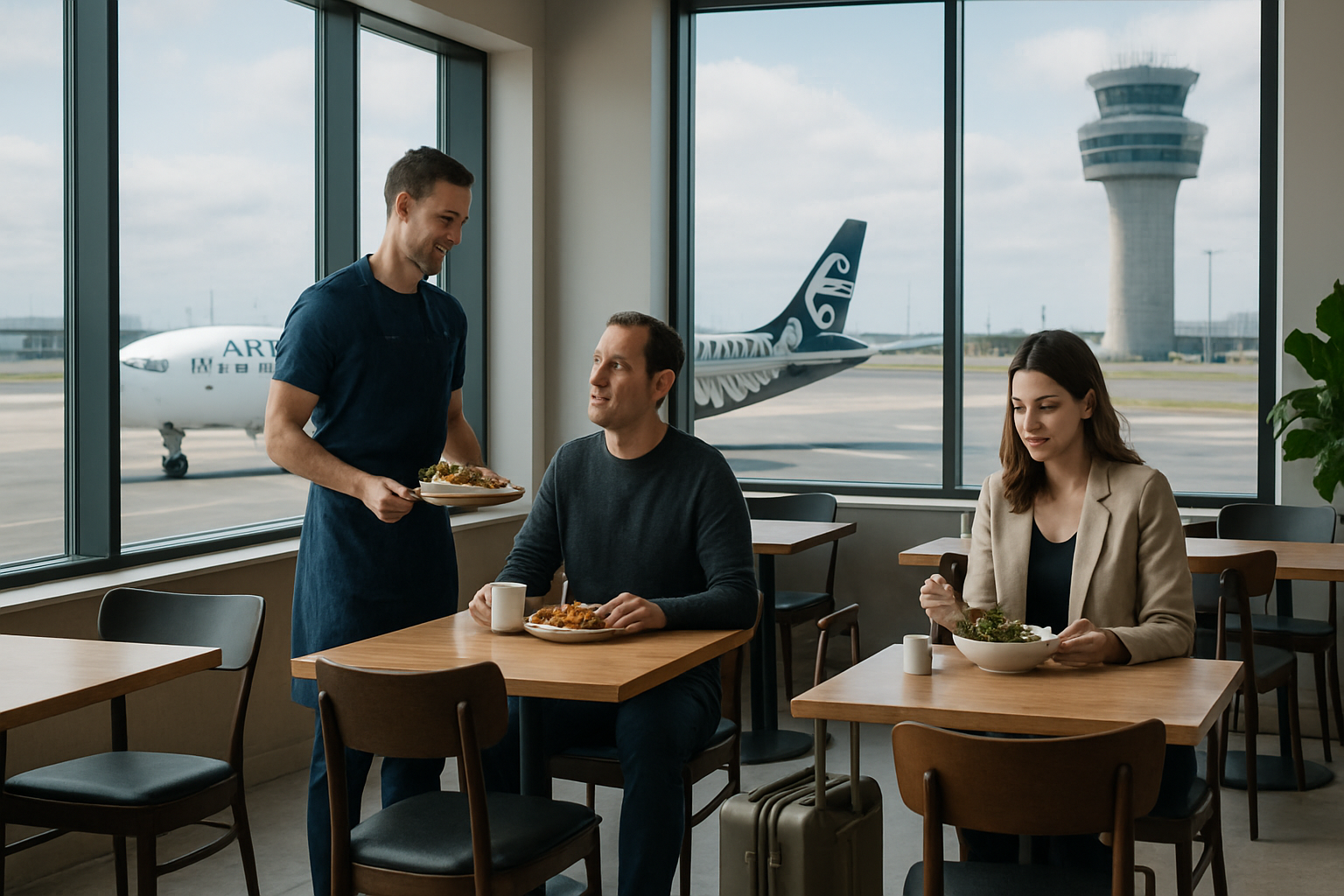
If you’ve ever watched the lunchtime rush near Auckland Airport, you know the scene: a stream of travelers scanning their phones for “airport restaurants auckland,” last-minute gate changes, and a juggling act of staff trying to keep queues moving and orders accurate. For local owners—restaurants in the terminals, eateries nearby in Māngere and Manukau, cafés on the commute route—this chaos is both a headache and a goldmine. More flights mean more hungry customers, but the peaks are unpredictable, reviews are public, and margins are tight. The good news? AI can make the rush not just manageable, but profitable.
In this guide, we break down how airport restaurants Auckland can leverage AI to become the go-to choice for time-pressed travelers—and how clinics, real estate offices, salons, and retail stores around the airport can use the same playbook. You’ll discover the tools, processes, and practical steps to win high-intent searches, reduce waste, shorten queues, and boost average order value, all while delivering a better guest experience.
Why Airport Restaurants Auckland Matters for Local Businesses
When people search for “airport restaurants auckland,” they’re in decision mode. They have a flight to catch, limited time, and clear intent. That makes airport dining one of the highest-conversion local categories. But the opportunity extends beyond terminals:
- Restaurants and cafés: High-velocity demand clustered around flight arrivals and departures.
- Retailers: Convenience purchases—snacks, chargers, travel pillows—are impulse buys optimized by timing and visibility.
- Clinics and wellness: Pre-flight checkups, jet-lag relief kits, and express services benefit from quick booking and wait-time transparency.
- Real estate and services: Returning residents and relocating workers pass through the airport; smart retargeting and educational content can capture future leads.
The challenge is timing, visibility, and operations precision. Flights shift. Lines build unexpectedly. Menus run out of popular items. The risk? Lost sales, low ratings, and frustrated staff. The opportunity? With AI-driven demand forecasting, dynamic messaging, and reputation management, local businesses around Auckland Airport can move from reactive to proactive—and win the moments that matter.
How AI Is Transforming Airport Restaurants Auckland and Local Hospitality
AI isn’t just a buzzword—it’s a toolbox for practical, measurable improvements:
- Demand forecasting tied to flight data: AI can blend flight schedules, historical sales, weather, and events to predict peaks by hour. This helps you prep food, staff appropriately, and adjust menus in real time.
- Queue and wait-time management: Computer vision or POS data can estimate queue times and push accurate wait-time messages to Google Business Profile and in-store screens, easing customer anxiety.
- Menu engineering and dynamic pricing: Machine learning highlights best-sellers, attachment items, and profitable bundles. Some tools can pilot time-bound promotions for slow periods or high-margin add-ons.
- Multilingual support for travelers: AI chatbots and translations handle menu questions, allergens, and store info across languages, helping international customers order with confidence.
- Local SEO and reputation automation: AI classifies reviews by topics (service speed, taste, cleanliness), surfaces root causes, and suggests priority fixes. It also helps craft fast, personalized responses that turn 3-star experiences into 5-star returns.
- Personalization and upsells: Recommenders suggest coffee with pastry, kids’ meal with smoothie, or travel-friendly snack bundles—boosting average order value without slowing the line.
- Inventory optimization: Predicting item-level demand reduces waste and stock-outs—a big win in food cost control.
- Smarter ads: AI-powered ad platforms automatically match intent-rich searches (e.g., “best breakfast near Auckland Airport”) with the right message and location extensions, driving foot traffic when you’re ready to serve.
Best AI Tools for Airport Restaurants Auckland and Nearby Businesses
You don’t need to rebuild your tech stack from scratch. These proven tools cover discovery, demand, and delivery:
- Google Business Profile (GBP): The single most important local SEO asset. Keep hours, menus, and attributes updated. Use Posts for time-sensitive promos (e.g., “Express breakfast before 9 a.m.”). Q&A and messaging help travelers get answers fast.
- Google Analytics 4 (GA4): Uses machine learning for predictive insights (likelihood to purchase/visit) and lets you track on-premise conversions from web interactions. Ideal for tying demand signals to marketing spend.
- PredictHQ: Demand intelligence that blends events, holidays, and other factors (including travel influences) to forecast customer surges, helping you staff and prep more precisely.
- OpenAI API (via OpenAI or Azure OpenAI): Build multilingual chat and voice assistants that answer menu questions, handle allergens, and route complex queries to staff. Great for WhatsApp, web, and kiosk support.
- Google Dialogflow CX: Enterprise-grade conversational AI for consistent, low-latency chatbots across your site, mobile, and call center—perfect for high traveler volume.
- SevenRooms: Reservations, waitlist, CRM, and marketing automation built for hospitality. Use guest profiles to personalize offers and message travelers at the right time.
- Sprout Social: Social listening and AI-powered sentiment analysis to spot issues (slow service, out-of-stock items) early and respond with empathy.
- ReviewTrackers: Centralizes Google, TripAdvisor, and other reviews; text analytics reveals themes and urgency so operations can fix what matters most.
- Yext: Manages listings accuracy across directories, enhances local SEO, and powers on-site search with AI so guests find answers instantly.
- Sauce Pricing: Dynamic pricing and promo optimization for delivery channels to match demand swings while protecting margins.
Step-by-Step Guide to Using AI in This Industry
Follow this practical roadmap to go from guesswork to data-driven growth:
1) Define your airport traveler journeys
- Map use cases: Grab-and-go breakfast, coffee before security, sit-down meal with kids, late-night snack for delayed flights, pickup for rideshare drivers.
- Identify questions travelers ask: Hours, queues, closest gate, allergens, kid-friendly options, charging outlets, fast service.
2) Perfect your Google Business Profile
- Verify and claim your listing. Set accurate hours, including holiday and disruption contingencies.
- Add complete menus, photos of the counter and seating, and accessibility information.
- Use Attributes (e.g., dine-in, takeaway, contactless payment) and mark “Located in Auckland Airport” for easy discovery.
- Post daily specials and flight-delay-friendly offers during peak disruption windows.
3) Centralize reviews and set up AI-driven reputation workflows
- Use ReviewTrackers or Yext to monitor all platforms. Configure alerts for ratings below 4 stars and topics like “long queue” or “cold food.”
- Train staff on a response playbook: acknowledge, apologize, offer a fix, and route operational issues to a daily stand-up.
4) Build a traveler-friendly chatbot
- Use Dialogflow CX or OpenAI API to power a bot on your site and WhatsApp. Cover hours, directions inside the terminal, menu filters (vegan, halal, gluten-free), and wait times.
- Connect it to a live agent handoff for complex cases. Keep bot responses short and skimmable.
5) Forecast demand with external signals
- Pull flight schedules, PredictHQ event data, historical POS sales, and weather to predict hourly peaks.
- Use forecasts to plan staff, prep levels, and bake times. Create a “prep board” that updates every hour.
6) Engineer your menu and bundles
- Identify top sellers with high margin and fast prep. Pair them with quick add-ons (bottle water, fruit cup, pastry) for one-tap upsells.
- Create “Flight-Delay Bundles” and “Kid Packs” that are easy to assemble and travel-friendly.
7) Run smarter ads for intent-rich searches
- In Google Ads, use location extensions and callouts like “5-min queue on average” or “Express breakfast all day.”
- Schedule ads to align with your forecasted peaks and flight banks.
- Retarget recent travelers within a short radius for a return visit on departure or during a layover.
8) Display real-time signals in-store and online
- Show estimated wait times on a screen near the entrance and in your chatbot.
- Pin a GBP Post when queues are short or when you have a “last call” special before quiet periods.
9) Train your team for AI-plus-human service
- Teach staff how the forecast informs prep and breaks.
- Use AI to suggest phrases for upsells and allergy-safe guidance, but let humans confirm and empathize.
10) Measure what matters and iterate
- Track: average order value, items per transaction, wait time, queue abandonment, review score trends, waste percentage, and labor cost vs. sales.
- Run weekly experiments: new bundles, revised signage, bot handoffs. Keep the winners, retire the rest.
Real-World Example or Case Study
Illustrative example (composite): Kiwi Kanteen, a fast-casual spot near Auckland Airport’s domestic terminal, struggled with unpredictable rushes and 3.9-star ratings citing long lines. They implemented:
- PredictHQ-driven prep planning that synced with flight banks and weather.
- A Dialogflow chatbot embedded on their site and WhatsApp, answering allergens, directions (“next to Gate 29 escalator”), and low-stock alerts.
- GA4 to tie “near me” searches and GBP clicks to in-store conversions.
- Menu engineering that paired barista drinks with pastry bundles during morning peaks and family snack packs in the afternoon.
- ReviewTrackers workflows to categorize reviews, with a daily 10-minute huddle to fix root causes (e.g., slow handoff station).
Outcomes over 90 days:
- Queue times dropped during peaks as prep better matched arrivals.
- Average order value rose after rolling out traveler bundles and one-tap add-ons.
- Rating improved as responses got faster and more empathetic, and operational issues were resolved.
While results vary by location and execution, the pattern is consistent: when airport restaurants Auckland align operations with traveler intent and timing—and use AI to keep promises—both guest satisfaction and revenue improve.
Benefits of Using AI in Local Business
- Smarter staffing and prep: Less chaos, fewer stock-outs, and lower waste.
- Higher conversion from search: Accurate GBP details and fast answers win “near me” moments.
- Faster service with fewer errors: Queue transparency and simplified bundles keep lines moving.
- Better reviews and loyalty: Proactive fixes and thoughtful responses build trust.
- Higher average order value: Data-driven recommendations and bundles add margin without adding friction.
- Multilingual access: Visitors order confidently with translated menus and chat support.
- Resilient operations: Forecasts anticipate disruptions, so you pivot smoothly.
Common Mistakes to Avoid
- Chasing shiny tools without a goal: Start with a clear metric (e.g., reduce wait time by 20%).
- Poor data hygiene: Inaccurate hours, outdated menus, and missing attributes kill local SEO.
- Over-automation: Keep a human-in-the-loop for complex or sensitive conversations.
- Ignoring privacy and consent: Get clear opt-ins for messaging and respect data rules.
- Measuring clicks, not profit: Track margin, waste, and labor—not just traffic.
- One-time setup mindset: Reviews, GBP, and models need weekly care.
- Forgetting traveler context: Menus must be easy to eat on the move; signage should mention gates and security.
FAQs
Q1: How can airport restaurants Auckland rank higher for “near me” searches?
A: Optimize Google Business Profile with precise hours (including disruptions), complete menus, quality photos, Attributes, and regular Posts. Maintain NAP consistency across directories via Yext, respond to reviews quickly, and use schema markup on your site.
Q2: Do I need a developer to add AI to my restaurant or clinic near the airport?
A: Not always. Many platforms (Dialogflow CX, SevenRooms, ReviewTrackers) offer no-code or low-code setups. For custom chat, partner with an agency to connect OpenAI or Dialogflow to your POS and FAQs.
Q3: What metrics show AI is working for local hospitality?
A: Track average order value, queue time, waste percentage, review scores by topic, GBP actions (calls, directions, website clicks), and labor efficiency. Tie these to your forecasted peaks.
Q4: Is AI only for large chains at the airport?
A: No. Small operators benefit quickly from GBP optimization, review automation, and demand-aware prep. Start small—automate reviews, add a basic chatbot, and forecast peak hours—then scale from there.
Q5: What’s the fastest win if I have just one week?
A: Fix your Google Business Profile, publish two high-need Posts (breakfast express and delay bundles), enable messaging, add top FAQs to your site, and pilot a simple chatbot for hours/menu/allergens. Then monitor reviews and adjust staff for the next flight bank.
Conclusion
Travelers don’t just want food; they want certainty. That’s why the businesses that will win searches for “airport restaurants auckland” are those that show accurate information, deliver fast and friendly service, and use AI to match demand with capacity. Start by perfecting your Google Business Profile, centralizing reviews, and forecasting peaks with external signals. Then add a multilingual chatbot, engineer high-margin bundles, and let data guide staffing and prep. Whether you run a café inside Auckland Airport or a salon five minutes away, these steps turn rush-hour chaos into a smooth, profitable flow. Ready to put AI to work? Start with one improvement this week and build momentum from there.
Sources & References:
- https://www.aucklandairport.co.nz/eat-and-relax/dining
- https://support.google.com/business/
- https://support.google.com/analytics/answer/9846734
- https://www.predicthq.com
- https://www.mckinsey.com/industries/travel-logistics-and-infrastructure/our-insights/how-travel-companies-can-use-advanced-analytics
- https://www.thinkwithgoogle.com/marketing-strategies/search/near-me-search-trends/