Best AI Phone System for Restaurants: Stop Missing Calls, Capture Orders, and Grow Revenue
Introduction
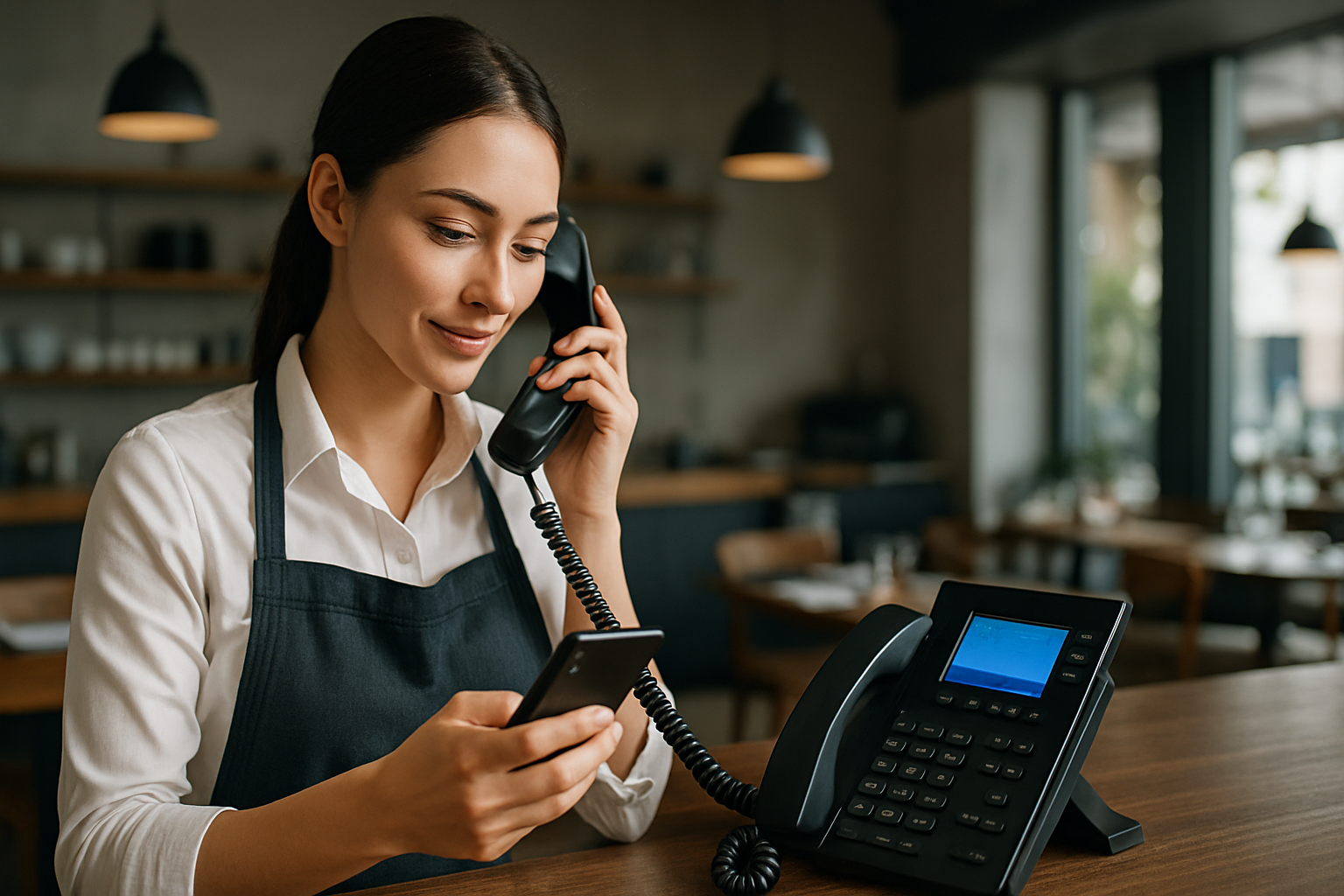
If you run a local restaurant, you already know the feeling: the lunch rush hits, phones keep ringing, and your front-of-house team has to choose between serving guests or answering calls. Missed calls mean missed orders and frustrated customers who turn to someone else. That is exactly where the best ai phone system for restaurants becomes a growth lever instead of a cost center. In plain terms, an AI phone system acts like a 24/7 virtual host who answers questions, takes orders, books reservations, and routes complex calls to the right person. In this guide, you will learn how AI voice can help your restaurant reduce missed calls, shorten wait times, increase order values through smart upsells, and improve your online reviews. We will cover real tools, a practical step-by-step plan, and a real-world example so you can move from curiosity to results.
Why the Best AI Phone System for Restaurants Matters for Local Businesses
Your phone is a point-of-sale channel whether you treat it like one or not. The problem is straightforward:
- People call to ask about menu items, allergens, wait times, or parking.
- Call volumes spike at exactly the worst times for your staff.
- After-hours calls go to voicemail and rarely convert.
- New staff struggle with consistency and upselling.
The opportunity is equally clear:
- Convert routine questions into instant answers to reduce call burden.
- Capture every after-hours lead with automated callbacks or SMS follow-ups.
- Deflect simple calls while routing high-value or sensitive calls to a live team member.
- Offer consistent, brand-aligned service in multiple languages.
- Track what callers ask and use it to optimize menus, staffing, and promotions.
In short, the best AI phone system for restaurants can turn the phone from a bottleneck into a revenue stream, while preserving human warmth during moments that truly require it.
How AI Is Transforming Restaurant Phone Operations
An AI phone system for restaurants is a conversational voice assistant designed to understand natural language, handle common requests, and complete tasks without a human operator. Modern systems use speech recognition, natural language understanding, and integrations with your core tools to handle:
- Live call answering and intelligent call routing based on intent
- Order taking for pickup and delivery with menu item recognition and modifiers
- Reservation booking and waitlist placement, including party size and special requests
- FAQ responses: hours, location, parking, catering, allergen info, happy hour, specials
- SMS follow-up for missed calls or order confirmations
- Multilingual support for your local market
- Analytics and call transcripts to identify trends and training opportunities
When connected to your POS (Toast, Square, Clover, Lightspeed) and reservation platforms (OpenTable, Resy, Yelp Reservations), AI can quote accurate prices, honor item availability, and reduce errors. Combined with VoIP providers like RingCentral, Nextiva, or Twilio, it can scale to handle multiple calls simultaneously. The result: fewer bottlenecks, more consistent service, and measurable gains in conversion and average order value.
Best AI Tools for Restaurant Phone Systems (Real, Proven Options)
These vendors are active in the space and used by restaurants today. Choose based on your size, menu complexity, and integration needs.
1) SoundHound Smart Answering (formerly SYNQ3 technology)
- What it does: Voice AI that answers calls, handles FAQs, routes to stores, and can power voice ordering experiences across phone and drive-thru.
- Why it stands out: Deep restaurant domain expertise and enterprise-grade conversational flow. Strong at handling spikes.
- Best for: Multi-location restaurants, busy takeout operations, brands seeking advanced automation.
2) Slang.ai
- What it does: AI phone agent that answers, routes, captures caller info, takes messages, and can provide instant SMS links (menus, reservation links, directions).
- Why it stands out: Fast deployment, polished voice experience, helpful analytics on caller intent.
- Best for: Independent restaurants and small chains needing an always-on virtual host.
3) ConverseNow
- What it does: AI voice assistants built for restaurant ordering over phone and drive-thru, with upsell logic and menu integrations.
- Why it stands out: Focused on increasing average check size and reducing labor pressure during peaks.
- Best for: QSR and fast-casual brands with high phone order volume.
4) Kea
- What it does: AI that takes phone orders and integrates with your POS, minimizing order errors and handling modifiers.
- Why it stands out: Emphasis on order accuracy and POS sync; designed specifically for restaurants.
- Best for: Restaurants with complex menus and high pickup/delivery demand.
5) RingCentral (Virtual Receptionist + AI)
- What it does: Business-grade VoIP with call routing, IVR menus, voicemail-to-text, and AI-assisted call handling features.
- Why it stands out: Reliable telephony foundation and scalability; pairs well with specialized AI voice partners.
- Best for: Restaurants that need a robust phone backbone plus basic automation, or that plan to integrate a dedicated AI voice tool on top.
6) Numa (Missed Call to Text)
- What it does: Automatically texts back missed callers, enabling quick replies, links to menus, and reservations.
- Why it stands out: Simple, practical way to recover revenue from missed calls without a full AI voice deployment.
- Best for: Small restaurants beginning their automation journey or complementing AI voice with SMS.
Step-by-Step Guide to Using AI in Your Restaurant Phone Workflow
Follow this plan to go from evaluation to measurable ROI.
1) Define the job to be done
- Decide your primary goal: reduce missed calls, take phone orders, answer FAQs, route catering leads, or book reservations. Start with one or two.
2) Audit your current calls
- For one to two weeks, track: number of calls, peak hours, common questions, order volume, and how many calls go to voicemail. Note language needs and hold times.
3) Pick your foundation
- Ensure you have a reliable VoIP or phone provider (e.g., RingCentral, Nextiva, Ooma). Confirm call forwarding and concurrent call handling.
4) Shortlist vendors
- Based on your goal, shortlist 2–3 vendors: for order-heavy lines consider ConverseNow or Kea; for broad phone coverage and FAQs consider SoundHound or Slang.ai; for missed-call recovery consider Numa.
5) Verify integrations
- Confirm compatibility with your POS (Toast, Square, Clover, Lightspeed) and reservations (OpenTable, Resy, Yelp). Ask about menu sync, item availability, taxes, and fees.
6) Prepare your knowledge base
- Provide clean, up-to-date menus (with modifiers), hours, holiday schedules, pickup instructions, delivery partners, allergen data, parking info, and top FAQs. Keep it short and structured.
7) Design call flows and handoffs
- Decide which intents the AI should handle end-to-end (e.g., FAQs, simple orders) and when to transfer to staff (e.g., complex catering). Set escalation phrases like ‘talk to a person.’
8) Configure compliance and payment
- If taking payments, require PCI-safe flows (e.g., payment links via SMS or secure capture) rather than reading card numbers aloud. Confirm call recording and privacy policies, and train staff on consent.
9) Pilot on one or two lines
- Start with your busiest line or after-hours line. Measure answer rate, containment (handled by AI without transfer), average handle time, and customer satisfaction.
10) Train and tune
- Review call transcripts weekly. Identify misunderstood phrases, refine menu synonyms (e.g., ‘parm’ vs. ‘parmesan’), adjust upsell logic, and tighten handoff thresholds.
11) Promote the new experience
- Update your Google Business Profile, website, Instagram bio, and in-store signage: ‘Instant answers 24/7 by phone,’ ‘Place pickup orders in seconds.’ Share a short how-to reel.
12) Expand and optimize
- Add languages, more locations, catering flows, and loyalty integrations. Test special campaigns (e.g., game-day bundles) with AI-driven upsells and track basket lift.
Real-World Example or Case Study
The Corner Grill (a composite of several independent restaurants) struggled with lunchtime call spikes. Two hosts juggled the door, to-go orders, and non-stop calls about hours, dietary needs, and reservations. On Fridays, 40% of calls went to voicemail.
What they did
- Implemented Slang.ai on the main line to answer FAQs, route catering leads, and text links to the online menu.
- Kept live transfer for catering or upset callers.
- Synced menu and hours with their POS (Toast) and posted consistent info to Google Business Profile.
First 60 days of results
- Answer rate: from ~60% to 98% (even during rush).
- Containment: 62% of calls fully handled by AI (no transfer).
- Labor lift: hosts focused on greeting and table turns, reducing average door wait time by 3 minutes.
- Revenue impact: recovered an estimated 18–24 phone orders per week that previously went to voicemail; average ticket up 7% when AI suggested sides and beverages.
- Guest satisfaction: negative phone-related reviews virtually disappeared; several guests mentioned ‘quick phone answers’ in their comments.
Key lessons
- Narrow scope first. FAQs and basic routing delivered fast wins; order-taking came later.
- Keep menus structured. Consistent naming of modifiers reduced misunderstandings.
- Human handoff matters. Clear escalation kept guest trust high.
Benefits of Using AI in Local Business
- Never miss a call: 24/7 coverage captures after-hours and peak-time demand.
- Faster service: Instant answers to routine questions reduce hold times.
- Higher revenue: Intelligent upsells and recovered missed calls lift order volume and ticket size.
- Better staff focus: Free your team to greet guests and speed table turns.
- Consistency: Every caller hears accurate, up-to-date info in your brand voice.
- Multilingual support: Serve your local community in the languages they prefer.
- Actionable insights: Call transcripts and analytics reveal what guests really want.
- Scalability: Handle call spikes without scrambling for extra labor.
Common Mistakes to Avoid
- Deploying AI without a clear goal: Pick one or two high-impact outcomes first.
- Skipping integrations: If the system cannot access your menu or reservations, accuracy suffers.
- Ignoring human handoff: Always provide a route to a person for sensitive or complex needs.
- Letting content go stale: Outdated hours, specials, or pricing erode trust.
- Over-automating payments: Use PCI-safe links and avoid collecting card numbers by phone.
- Not training on local lingo: Teach synonyms, nicknames, and common abbreviations.
- Setting and forgetting: Review analytics weekly and continuously improve.
FAQs
1) What is the best AI phone system for restaurants?
- The best choice depends on your goals. For broad call handling and FAQs, solutions like SoundHound Smart Answering or Slang.ai are strong. For phone ordering with upsells and POS sync, look at ConverseNow or Kea. Pair a reliable VoIP provider like RingCentral as your telephony backbone.
2) Can AI take phone orders accurately and safely?
- Yes, when integrated with your POS and a structured menu, AI can capture orders with modifiers and availability checks. For payments, use PCI-safe flows such as secure payment links via SMS or your online checkout instead of sharing card numbers by phone.
3) How much does an AI phone system cost for a small restaurant?
- Pricing varies by vendor and scope. Expect entry-level pricing from a few hundred dollars per month for basic AI answering, to higher tiers for full phone ordering with deep integrations. Many platforms offer pilots so you can validate ROI before scaling.
4) Will AI replace my front-of-house team?
- No. The best AI handles repetitive tasks and FAQs so your team can focus on hospitality, upselling in person, and problem-solving. Use AI for consistency and coverage, and keep humans for empathy, exceptions, and brand moments.
5) How do I integrate AI with my menu and reservations?
- Provide a clean, current menu with modifiers and allergens. Connect your POS (Toast, Square, Clover, Lightspeed) and reservation tools (OpenTable, Resy) through your vendor’s integration. Test common flows—placing an order, checking wait time, booking a table—before going live.
Conclusion
Your phone is a revenue channel hiding in plain sight. With the best ai phone system for restaurants, you can answer every call, convert more orders, and give guests a smoother experience without stretching your team thin. Start small: handle FAQs and after-hours calls, then add phone ordering and upsells once your foundation is solid. If you are ready to pilot, shortlist two vendors that match your goals, plug them into your POS and reservations, and measure results in 30–60 days. A few smart automations can turn call chaos into consistent revenue and happier guests.
Sources & References:
- https://www.soundhound.com/solutions/restaurant
- https://www.slang.ai
- https://www.conversenow.ai
- https://www.kea.ai
- https://www.ringcentral.com
- https://www.opentable.com