Airport Restaurants Breakfast: How AI Helps You Win the Morning Rush (and What Local Businesses Can Learn)
Introduction
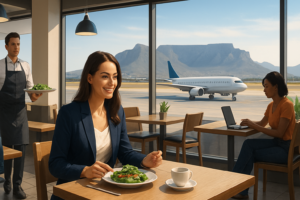
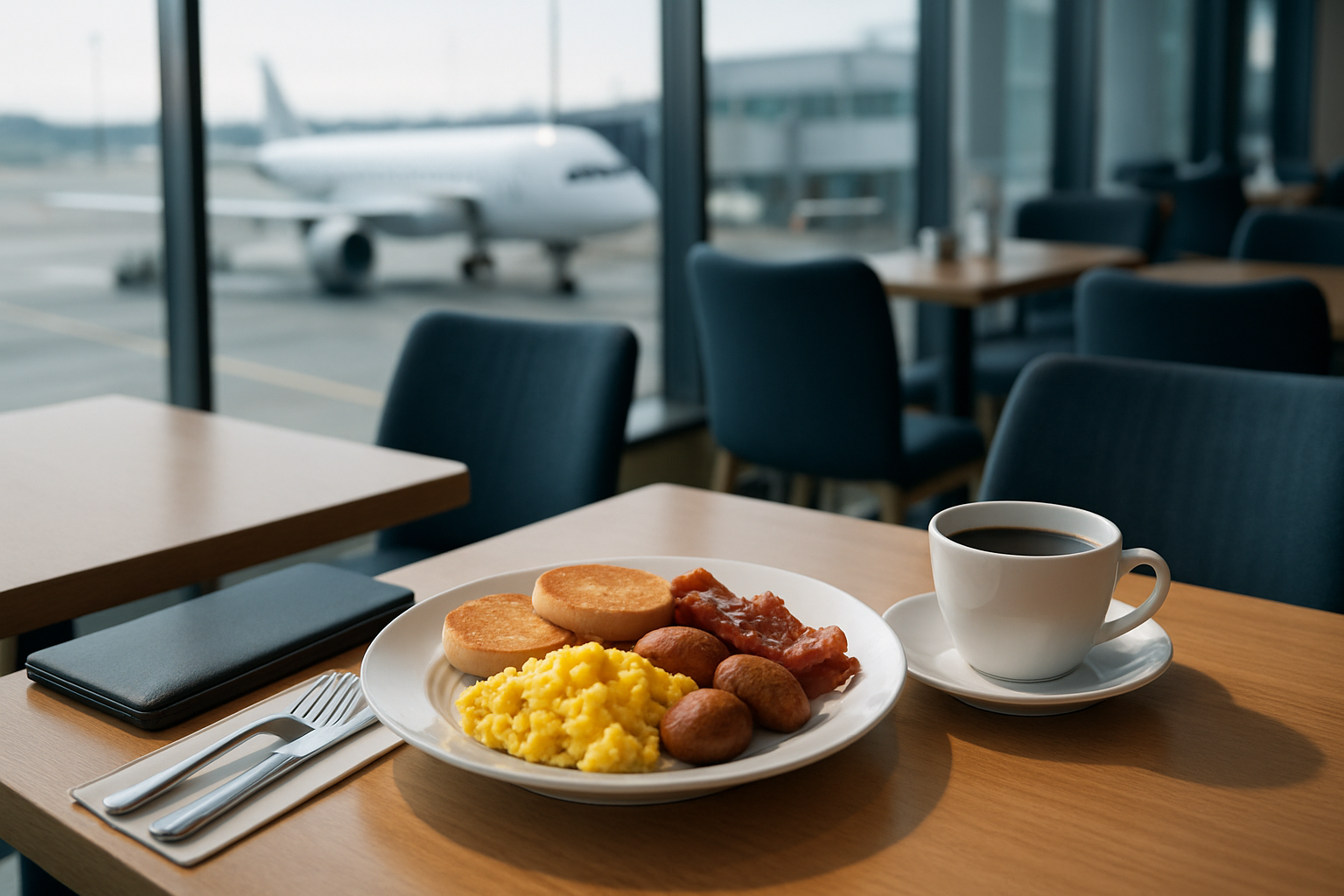
The morning rush is unforgiving. Whether you run a cafe in a busy terminal or a neighborhood bakery, those first few hours can make or break your day. Airport restaurants breakfast service is a masterclass in speed, precision, and consistency. Travelers want hot coffee, protein-rich meals, and grab‑and‑go options—fast. Lines build. Inventory vanishes. Staff juggle dine‑in and takeout while flight boards change in real time. If you’ve ever thought, “There has to be a smarter way,” you’re right. Artificial intelligence is already reshaping airport breakfast operations—and the playbook translates directly to local businesses like yours. In this article, we’ll break down how airport restaurants breakfast strategies powered by AI can help you forecast demand, shorten queues, optimize menus, minimize waste, and boost revenue—without burning out your team.
Why Airport Restaurants Breakfast Matters for Local Businesses
Airport breakfast service is the ultimate stress test: short windows, high volume, tight logistics, variable foot traffic, and time-sensitive customers. If a concept can thrive here, it can thrive almost anywhere. Here’s why it matters to local restaurants, cafes, clinics with morning appointments, real estate offices scheduling early showings, and retailers opening at dawn:
- Peak-hour mastery: Breakfast is often your highest margin and highest churn window. Nail the morning, and you set the tone (and cash flow) for the day.
- Predictable chaos: Commuter patterns, school runs, and appointment blocks mirror terminal flows. Learning from airport operations helps you anticipate spikes down to 15–30 minute intervals.
- Menu engineering pressure: Airport restaurants must offer compact menus that travel well, meet dietary needs, and can be prepared in under five minutes. That discipline can elevate any local menu.
- Reputation at speed: In the age of Google Maps, Yelp, and TripAdvisor, a single slow morning can tank ratings. Operational excellence is marketing.
- Data-rich environment: Airports use flight schedules, TSA throughput, and gate-level traffic to make decisions. You can mirror that with point-of-sale data, footfall counters, booking calendars, weather, and local events.
How AI Is Transforming Airport Restaurants Breakfast Operations
AI thrives where there’s repeatable complexity. Breakfast at airports fits perfectly. Here’s how AI is changing the game—and how you can adapt the same methods:
- Demand forecasting: Machine learning models combine historical POS sales, day of week, seasonality, TSA throughput, flight schedules, and even weather to forecast item-level demand by 15–60 minute windows. Local analog: forecast coffee orders, egg sandwiches, smoothies, or croissants using past sales, weather, and neighborhood events.
- Smart staffing: AI translates demand forecasts into recommended staffing plans, shift start times, and break windows to minimize overtime and reduce idle time.
- Inventory optimization: Predictive models alert you when key SKUs (eggs, bacon, oat milk, pastry sheets) will run low and auto-generate prep lists or vendor orders. Waste falls, stockouts drop.
- Queue management and order routing: Computer vision or POS-integrated analytics estimate wait times in real time, guiding staff to open additional stations and routing mobile orders to the right make line.
- Menu engineering and dynamic bundles: AI identifies high-margin, high-velocity items, suggests profitable bundles (e.g., breakfast bowl + drip coffee upsell), and hides low performers during peak to speed throughput.
- Personalized offers: Geofenced and time-bound offers target travelers (or commuters) within a certain radius during morning windows, using predicted intent to increase conversion on “order ahead.”
- Pricing and promo timing: Dynamic pricing within brand guardrails (e.g., small add-on increases during peak, loyalty credit during off-peak) keeps flow steady and margins stable.
- Reputation management: NLP analyzes reviews mentioning “breakfast,” “wait time,” “airport,” “terminal,” or “grab-and-go,” extracting themes to fix operational bottlenecks.
Best AI Tools for Airport Restaurants Breakfast Optimization
These real, battle-tested tools can help airport operators—and local businesses—deploy AI without heavy engineering. Choose what matches your stack and budget:
- Toast or Square (POS and analytics): Modern POS platforms like Toast and Square provide sales analytics, menu performance, time-of-day trends, modifier patterns, and integrations for forecasting and online ordering.
- Olo (online ordering and dispatch): Manages order-ahead, delivery integrations, and throttling to prevent kitchen overload during the breakfast rush.
- SevenRooms or Tock (guest experience and CRM): Build profiles, track visit frequency, trigger personalized morning offers, and manage waitlists/reservations.
- Google Analytics 4 + Looker Studio (digital behavior + reporting): Understand how users find your menu in the morning, measure conversions on “order ahead,” and visualize hourly trends.
- Amazon Forecast or Google Cloud Vertex AI Forecasting (demand forecasting): Feed historical sales, events, and weather to generate item-level demand predictions.
- Fobi, Density, or Occuspace (foot traffic counters): Monitor real-time occupancy and dwell time; pair with POS for precision staffing.
- Dynamic Yield or Adobe Target (personalization/experiments): Run geofenced morning campaigns, test bundles on digital menus, and serve offers based on traveler or commuter intent.
- Intercom or Ada (AI support/chatbots): Answer “breakfast hours,” “gluten-free options,” or “pre-security vs post-security” questions automatically, offloading staff.
- Zapier or Make (automation): Sync forecasts to prep lists, push 6 a.m. staff reminders, or pause third-party delivery during spikes.
- Tableau, Power BI, or Looker (BI): Centralize dashboards for breakfast KPIs: average ticket, throughput per station, prep waste, ready-time accuracy.
- Google Business Profile + Schema.org (local SEO): Publish accurate breakfast hours, menu schema, and photos; improves visibility on Maps for “best airport breakfast near me.”
Step-by-Step Guide to Using AI to Optimize Airport Restaurants Breakfast (and Your Morning Service)
1) Centralize your data
- Export 12–24 months of sales from Toast/Square by item, time, and channel (dine-in, takeout, mobile).
- Pull footfall data (counters), TSA throughput or local commuter patterns, weather history, and event calendars.
- Tag breakfast items consistently (e.g., “Breakfast Sandwich – Bacon,” “Oat Latte,” “Greek Yogurt Parfait”).
2) Build a baseline dashboard
- Use Looker Studio or Power BI to visualize hourly sales by day of week, top 20 breakfast items, average prep time, average wait, and out-of-stock incidents.
- Identify your true peak windows (e.g., 6:30–8:45 a.m.).
3) Implement demand forecasting
- Start with an out-of-the-box service: Amazon Forecast or Vertex AI Forecasting.
- Train on historical sales + weather + weekday + holiday flags + event/flight proxies.
- Generate 7–14 day forecasts at 15–60 minute intervals for top breakfast SKUs.
4) Translate forecasts into operations
- Convert item-level volume into prep lists (eggs to crack, bacon trays, pastry bakes) scheduled by time block.
- Share a simple “first-hour playbook” with staff: who’s on espresso, who’s on hot line, who monitors mobile orders.
- Use Zapier to auto-send prep lists nightly to your kitchen Slack/WhatsApp group.
5) Optimize your menu for speed and margin
- Remove or hide slow dishes during peak (keep them for off-peak).
- Create 3–4 profitable bundles: “Egg Wrap + Drip,” “Parfait + Cold Brew,” “Veggie Bowl + Tea.”
- Add carry-on-friendly packaging; label with gate-friendly condiments.
6) Tame the queue
- Turn on order throttling in Olo/Toast when wait exceeds your target (e.g., 6 minutes).
- Add a 1–2 tap “order again” button in your app for commuters and frequent travelers.
- Use simple digital signage to show real-time wait estimates; recalibrate with POS timestamps.
7) Personalize and geofence breakfast marketing
- Set GA4 audiences for “morning visitors” and “order-ahead users.”
- Run 5–8 a.m. Google Maps and Instagram geofenced ads with “Ready in 5 minutes” copy near terminals or transit hubs.
- Offer loyalty boosts for early birds on slow Tuesdays/Thursdays to smooth the curve.
8) Measure what matters
- Core KPIs: average ticket, orders per labor hour, on-time ready percentage, waste %, mobile adoption, review sentiment for “breakfast,” “wait,” “airport,” and “grab-and-go.”
- Review weekly; ship 1 small improvement per week.
9) Scale to other morning businesses
- Clinics: use appointment and insurance mix data to forecast front-desk demand, staff accordingly, and pre-stage intake forms.
- Real estate: predict morning inquiry peaks; auto-respond with listings and pre-qual flows.
- Retail/salons: align staffing and promos to commuter footfall; offer express morning bundles.
Real-World Example or Case Study
SkyBite Diner, Terminal B (composite example based on real patterns)
- Challenge: Lines spiked to 25 people between 6:45–8:30 a.m., out-of-stocks on croissants and oat milk, and a 3.8 rating citing “slow breakfast.”
- Approach:
- Data: 18 months POS data + TSA throughput + weather.
- Forecasting: Vertex AI predicted 15-minute demand for 30 SKUs; accuracy improved to within 8–12% for top items.
- Operations: Auto-generated 5 a.m. prep lists, restructured stations (espresso, hot line, cold/grab‑and‑go), and implemented order throttling via Olo.
- Menu: Removed a slow shakshuka during peak; introduced “Jet Fuel Combo” (bacon egg wrap + drip) and “Gate A Green” (veggie bowl + green tea).
- Marketing: Geofenced 1.5‑mile radius with “Breakfast ready in 5–7 minutes” Google Maps ads; pushed app-based “order again” for frequent flyers.
- Reputation: Intercom bot answered “post-security?” and “gluten-free?” questions; staff focused on execution.
- Results (90 days):
- Wait time reduced from 9:20 to 5:40 minutes (median).
- Out-of-stocks down 63% for top five SKUs.
- Breakfast average ticket up 12% from bundles and add-on prompts.
- Labor efficiency up 18% orders per labor hour.
- Rating improved from 3.8 to 4.4 with positive mentions of “fast breakfast,” “grab‑and‑go,” and “friendly team.”
- Local takeaway: The same blueprint works for a downtown cafe or a suburban bakery. Start with forecasts, clean up the morning menu, and fix the queue with simple automation.
Benefits of Using AI in Local Business (Lessons from Airport Breakfast)
- Faster lines, happier customers: Predictive staffing and throttling keep waits predictable.
- Higher margins without raising base prices: Smart bundles and add-on prompts lift average ticket.
- Less waste, better cash flow: Forecast-driven prep reduces spoilage and emergency orders.
- More five-star reviews: Shorter waits, clear communication, and accurate orders improve sentiment.
- Stronger loyalty: Personalized morning offers and “order again” shortcuts build habits.
- Smarter marketing spend: Geofenced and time-bound ads reach buyers with breakfast intent right now.
- Resilient operations: Data-driven schedules and menus handle surprises (weather swings, flight delays, school holidays).
Common Mistakes to Avoid
- Forecasting without action: Predictions are useless if they don’t drive prep lists, staffing, and station assignments.
- Overcomplex menus during peak: A big breakfast menu slows throughput. Hide slow items until 10 a.m.
- Ignoring packaging: Airport or commuter customers need carry-on-friendly packaging and spill-proof lids.
- One-size-fits-all promos: Morning commuters ≠ weekend travelers. Segment by day and audience.
- Forgetting review keywords: Track mentions of “breakfast,” “wait,” “airport,” “terminal,” and “grab-and-go” to find the real issues.
- No fail-safes: Always set minimum stock alerts for staples (eggs, bacon, oat milk) and have a backup vendor.
- Data silos: Connect POS, online ordering, footfall, and marketing into one dashboard to see the full picture.
FAQs
1) What is the fastest way to improve airport restaurants breakfast service?
- Start with a focused breakfast menu, turn on order throttling, and implement a basic demand forecast for your top 10 SKUs. Then convert forecasts into timed prep lists.
2) Which data sources matter most for breakfast forecasting?
- Historical POS by item and time, day-of-week patterns, weather, local events or flight throughput, and channel mix (mobile vs walk-in). More context equals better predictions.
3) How can small, non-airport businesses apply the same tactics?
- Mirror peak windows (commute hours), forecast item demand, simplify your morning menu, use geofenced ads near transit hubs or offices, and promote order-ahead with pickup shelves.
4) Will AI increase or reduce labor needs?
- Typically, AI improves labor allocation. You may not need more people—just the right people at the right times, with clearer roles during peak.
5) How do I measure success for airport restaurants breakfast optimization?
- Track median wait time, on-time order readiness, average ticket, waste %, mobile order share, and review sentiment for breakfast keywords. Review weekly and iterate.
Conclusion
Airport restaurants breakfast operations reveal the blueprint for winning mornings everywhere: predict demand, simplify the menu, staff with precision, and keep lines moving. AI doesn’t replace your team—it gives them a head start. Whether you run a terminal cafe, a neighborhood coffee shop, a clinic with early check-ins, or a retail store opening at dawn, these same tools can lift revenue, cut waste, and improve customer satisfaction. Start small with forecasting and queue controls, add smart bundles and geofenced offers, and tune your operation weekly. The businesses that own breakfast often own the day—use AI to make sure you’re one of them.
Sources & References:
- https://www.mckinsey.com/capabilities/quantumblack/our-insights/the-state-of-ai-in-2023
- https://cloud.google.com/vertex-ai
- https://aws.amazon.com/forecast/
- https://www.toasttab.com/blog
- https://support.google.com/business
- https://www.tsa.gov/boarding-pass/throughput